This article was first published in our annual equity report, The Deal, under the title “The Hedge Fund-ification of Venture Capital”.
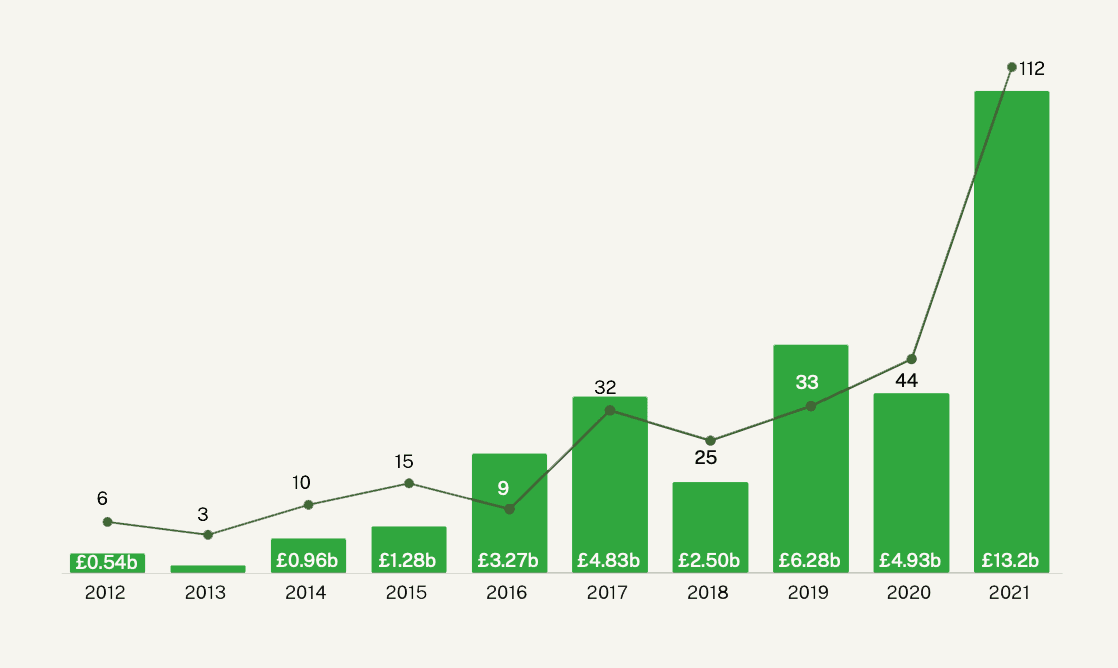
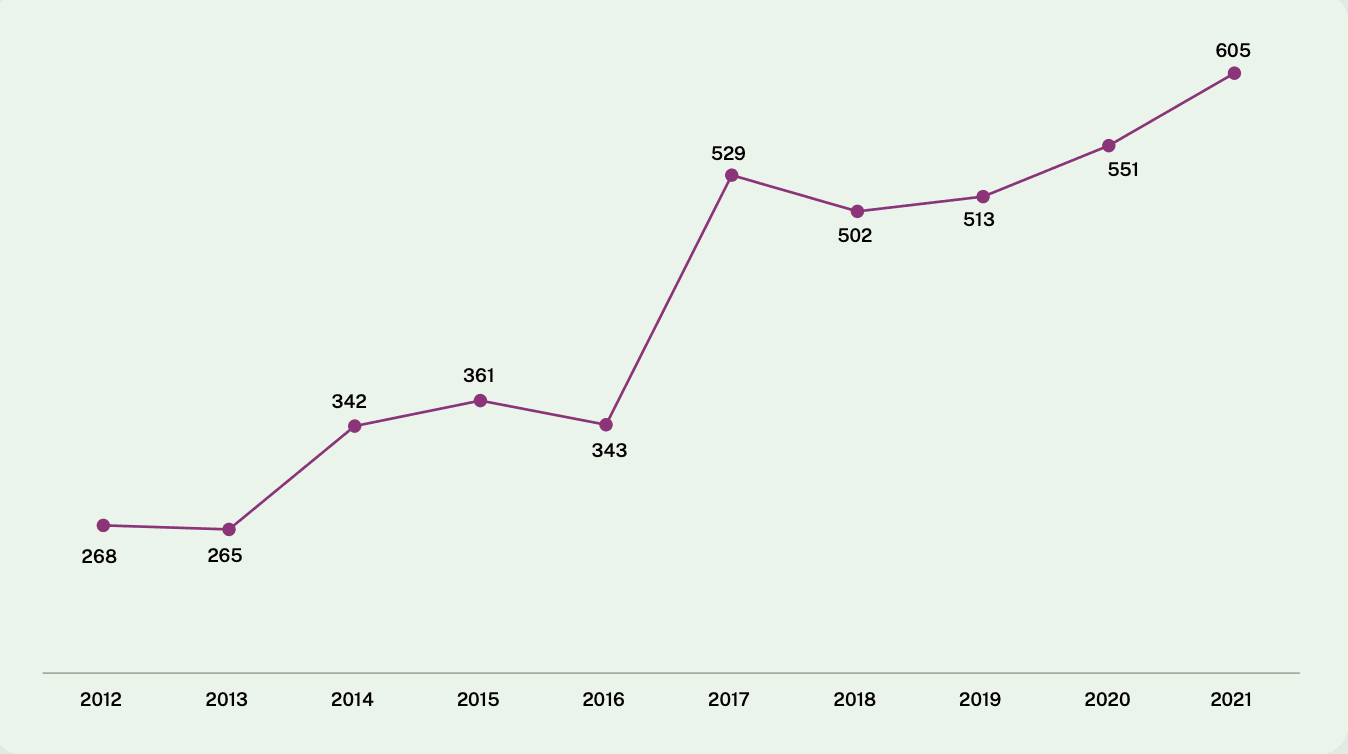
We saw record equity investment in the UK in 2021, both in terms of the total amount invested and the number of deals. The country’s high-growth startups and scaleups secured £22.7b across 2,679 announced equity rounds, up from £11.3b across 2,283 rounds in 2020.
This increase in private market activity was repeated around the world as economic stimulus measures drove investors into riskier assets.
Traditionally, VC and PE firms have operated on distinct investment models from hedge funds; they are usually structured as closed-ended vehicles with investor withdrawals only possible at the end of a 10-year cycle. Hedge funds have operated an open-ended structure, allowing investors to move in and out of the fund based on shorter term performance.
Amid the frenzied shovelling of cash into private companies, some venture capital and private equity investors were behaving in new and intriguing ways, and it seems that the traditional 10-year venture capital fund lifecycle may finally be going out of fashion. It is being replaced by something more akin to a hedge fund structure. Beauhurst data can help shed light on why this is happening and why venture capitalists are facing more competition than ever before for deals.
A brief history of the venture capital investment model
In the book “VC: An American History”, Harvard Business School professor Tom Nicholas locates the emergence of the venture capital model in the approach to capital deployment that came to prominence with the rise of the American whaling industry in the 18th and 19th centuries. While the following 100 years or so saw the emergence of innovations such as the limited partner structure, Nicholas notes that the business model for venture capital has proved to be remarkably stable over time:
“…if one asks how exactly VCs do what they do, it is not clear that the answer today is much different from half a century ago. The dominant form of organization is still the limited partnership with an ephemeral fund life, even though this places constraints on the time scale of investment returns. Although there have been some organizational structure and strategy innovations, these have been paradoxically rare in an industry that finances radical change.”
Given the stability of the VC fund model through time, it was big news in the industry when US venture capital firm Sequoia Capital announced last year that it was moving to a permanent structure. In a Medium article announcing the shift, general partner Roelof Botha highlighted that the industry is stuck using a 10-year fund cycle that is no longer fit for purpose. Sequoia’s new structure has more in common with the open-ended structure typical of hedge funds. Botha noted that founders’ ambitions are not constrained to a 10-year period, so neither should Sequoia’s. Botha’s words echo those of Nicholas:
“Ironically, innovations in venture capital haven’t kept pace with the companies we serve. Our industry is still beholden to a rigid 10-year fund cycle pioneered in the 1970s. As chips shrank and software flew to the cloud, venture capital kept operating on the business equivalent of floppy disks. Once upon a time the 10-year fund cycle made sense. But the assumptions it’s based on no longer hold true, curtailing meaningful relationships prematurely and misaligning companies and their investment partners.”
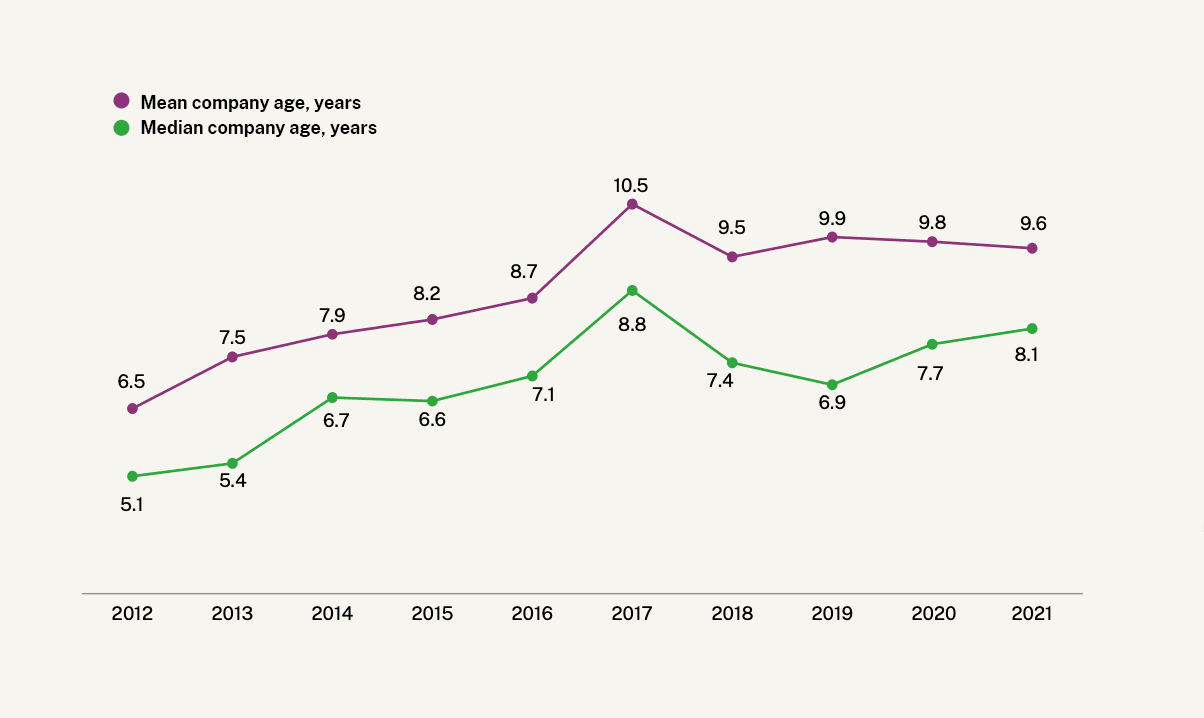
Beauhurst data over the last decade confirms that equity-backed companies in the UK are taking longer to achieve an exit, either through an initial public offering (IPO) or acquisition. Both the mean and median number of years from incorporation to exit for companies backed by venture capital and private equity firms have increased by around 50%. This shift among UK startup companies could be part of a global trend, causing the venture capital industry to reevaluate its business model.