With the UK Government’s Coronavirus Job Retention Scheme drawing to a close at the end of September, and normality creeping back into society, we’re reflecting on the effectiveness of government measures taken to stabilise businesses during the pandemic.
When announcing the initial economic measures back in March 2020, Chancellor Rishi Sunak pointed to two aims: protecting jobs (to avoid large spikes in unemployment) and supporting businesses (to reduce the extent to which they’re impacted). We’ll keep these factors in mind whilst judging the effectiveness of UK Government measures.
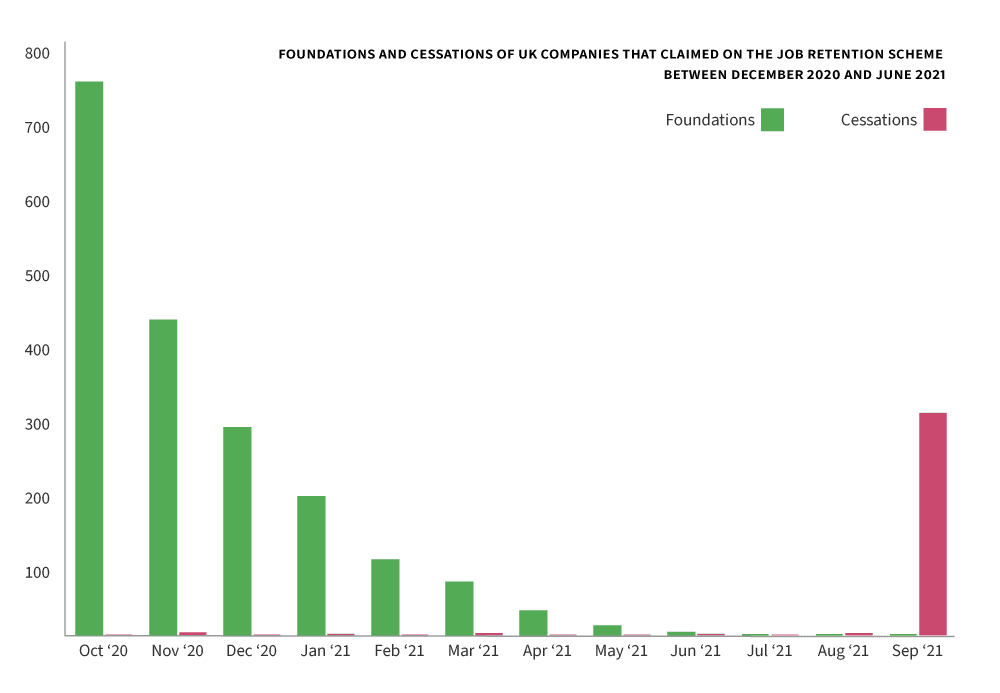
The most notable project undertaken to achieve these aims was the Job Retention Scheme, also known as the furlough scheme. The programme saw 80% of an employee’s salary funded by the Government if they were unable to work through the pandemic, up to a limit of £2.5k a month.
Meanwhile, the Government also implemented several economic stimulus measures to support the UK’s businesses through COVID-19. These included a Coronavirus Business Interruption Loan Scheme (CBILS) and the BounceBack Scheme, both introduced to help small businesses, and the Future Fund, providing government-backed convertible loans to companies that had previously raised equity finance (so long as these investments were matched by private investment).
Overall Trends in Company Foundations and Cessations
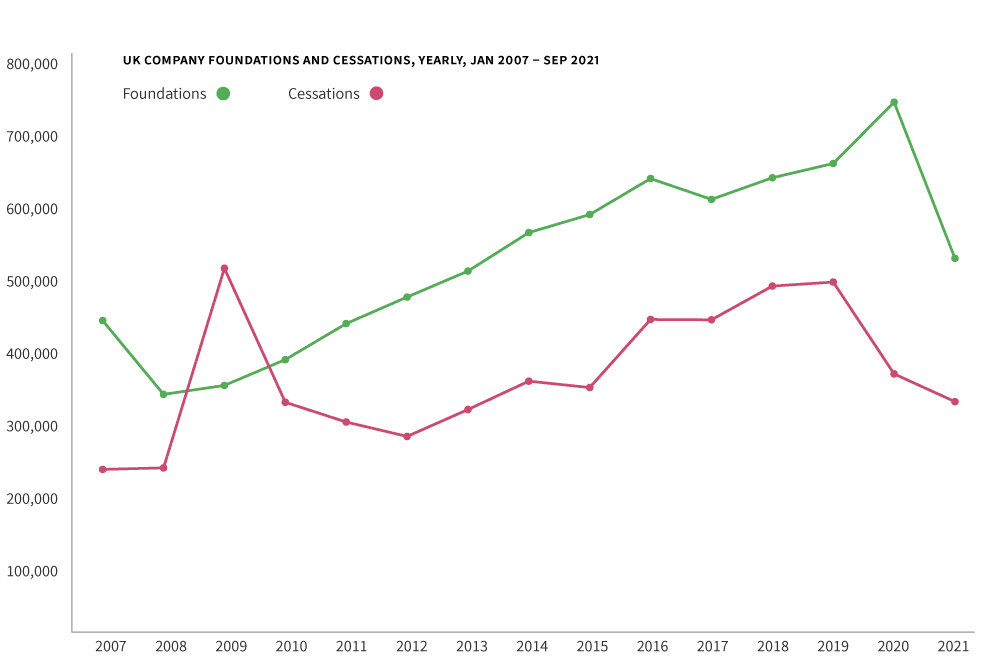
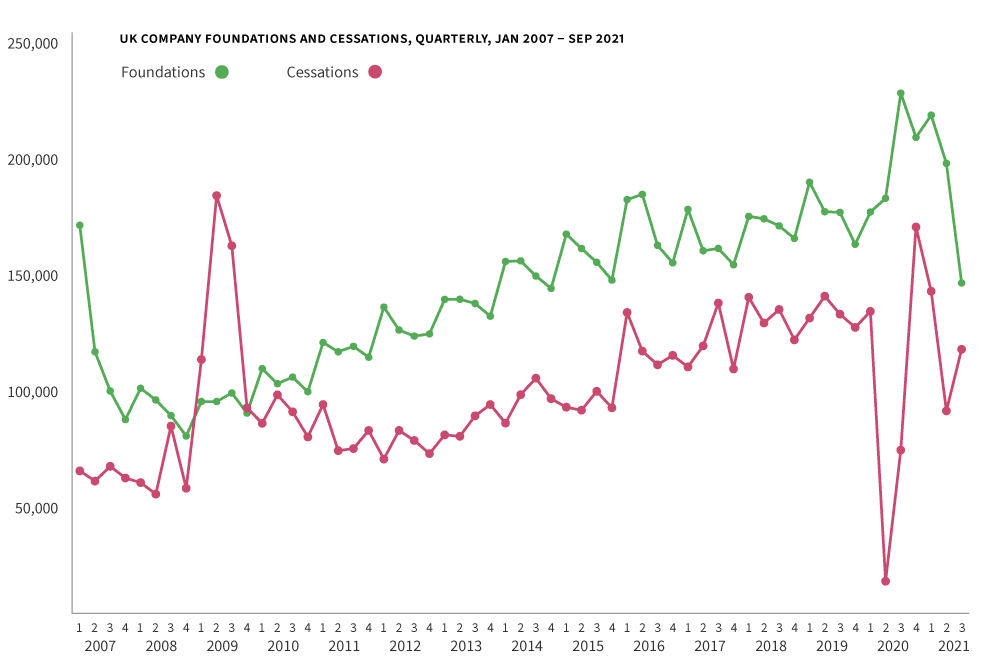
If the aim of these projects was to avoid a crashing economy, of the type observed following the 2008 financial crisis, our data showcases signs of success.
Between 2008 and 2009, the number of companies incorporated increased by merely 3.7%. In this same time frame, the number of businesses that ceased all operations jumped by over 120%, with almost 53k companies shutting down. You can see a clear difference when comparing this activity with the same data between 2019 and 2020.