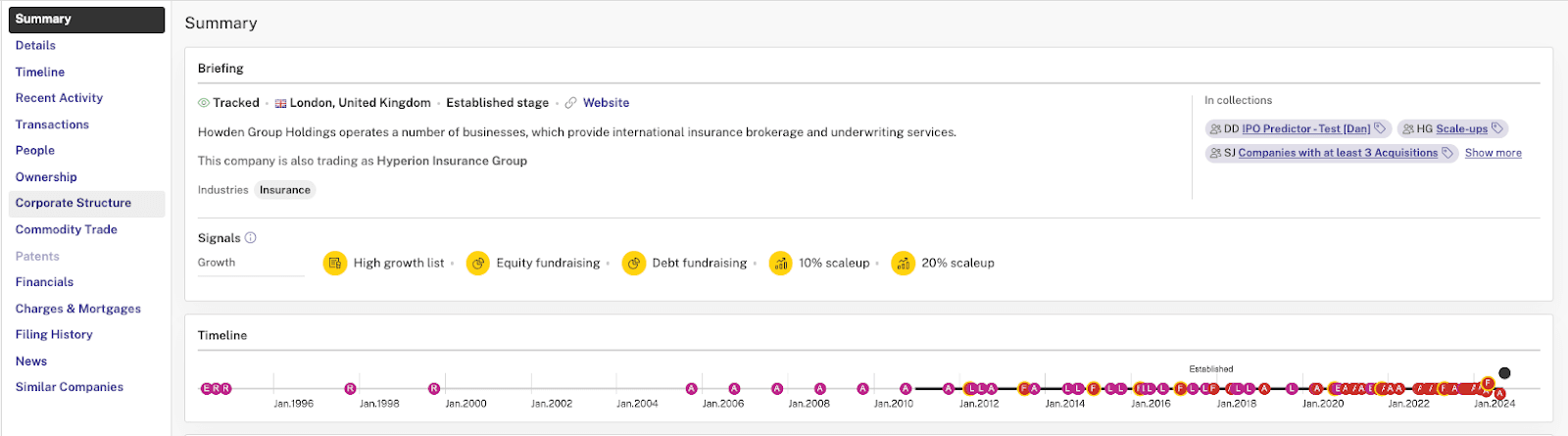
The way companies are structured is central to their operations, and understanding these frameworks is essential for any business.
Corporate structures are foundational to how businesses operate, and understanding them is key for assessing the risk and stability of potential partners. Whether it’s for partnerships, investments, or acquisitions, companies must conduct due diligence to ensure they are dealing with trustworthy entities.
According to Emerging Growth and Risk Trends: Data Insights on Companies in Europe, 64% of organisations consider third-party risk management, which includes assessing corporate structures, a strategic priority for their leadership teams. This reflects the growing recognition that understanding who controls and influences a business can mitigate financial and reputational risks.
However, with corporate structures becoming increasingly complex, the process of manually verifying ownership layers, Ultimate Beneficial Owners (UBOs), and related risks can take time and effort. That’s why having tools that streamline this process is invaluable, enabling businesses to conduct thorough due diligence with greater confidence and efficiency.
What are company corporate structures?
A corporate structure represents how a company is organised in terms of ownership, control, and legal entities. At its simplest, it shows the hierarchy between parent companies, subsidiaries, and affiliates. It can also reveal key people within a company, such as directors or those with significant control (known as PSCs, or Persons with Significant Control).
Corporate structures can vary greatly in complexity. Some businesses have straightforward structures, with a single parent company overseeing all operations.
Others, especially multinational corporations, can have intricate networks of subsidiaries across various countries, often involving multiple layers of ownership. These structures can be essential for a range of stakeholders to understand, from law firms and advisory clients to universities and corporate partners.
Why would a company want to check a corporate structure?
1. Identifying Ultimate Beneficial Owners (UBOs)
Identifying the UBOs and understanding the jurisdictions of all entities in a corporate structure is crucial for law firms and advisory clients.
UBOs, often hidden through layers of holding companies or offshore entities, can pose varying levels of regulatory risk depending on their location or background. Ensuring you know who ultimately controls a business helps maintain compliance with anti-money laundering (AML) regulations. It also helps avoid reputational or financial risks associated with high-risk or sanctioned owners.
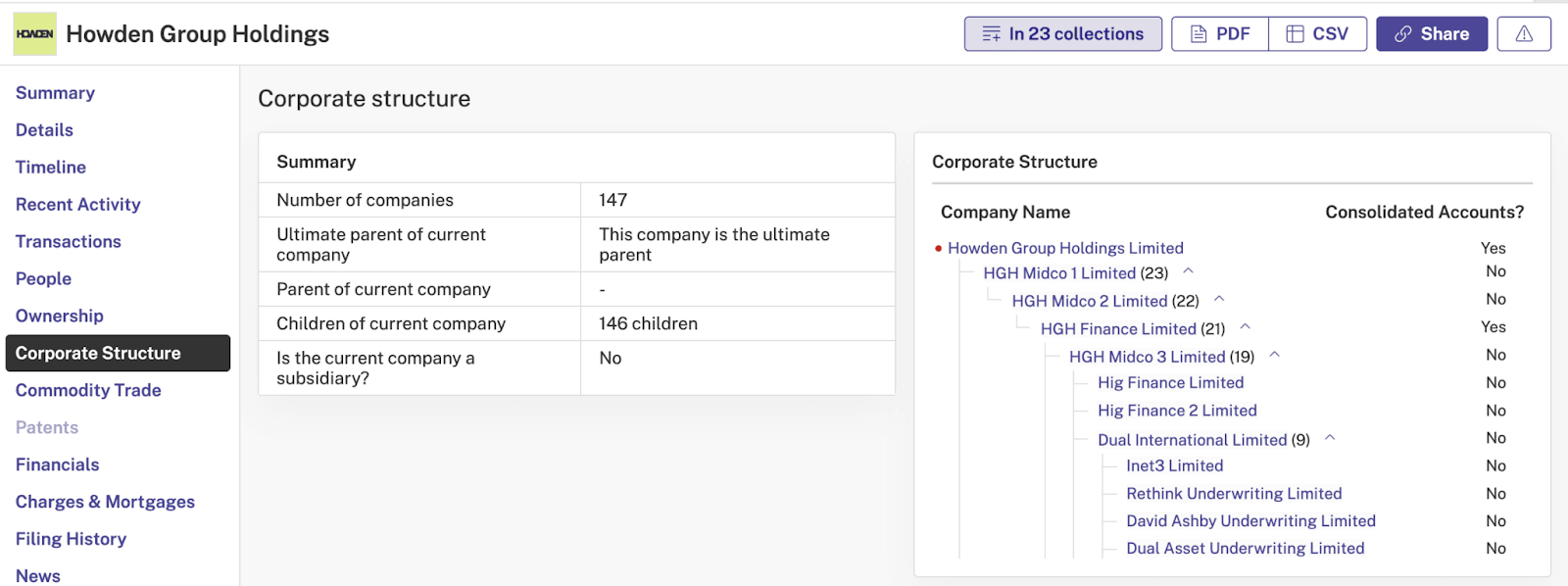
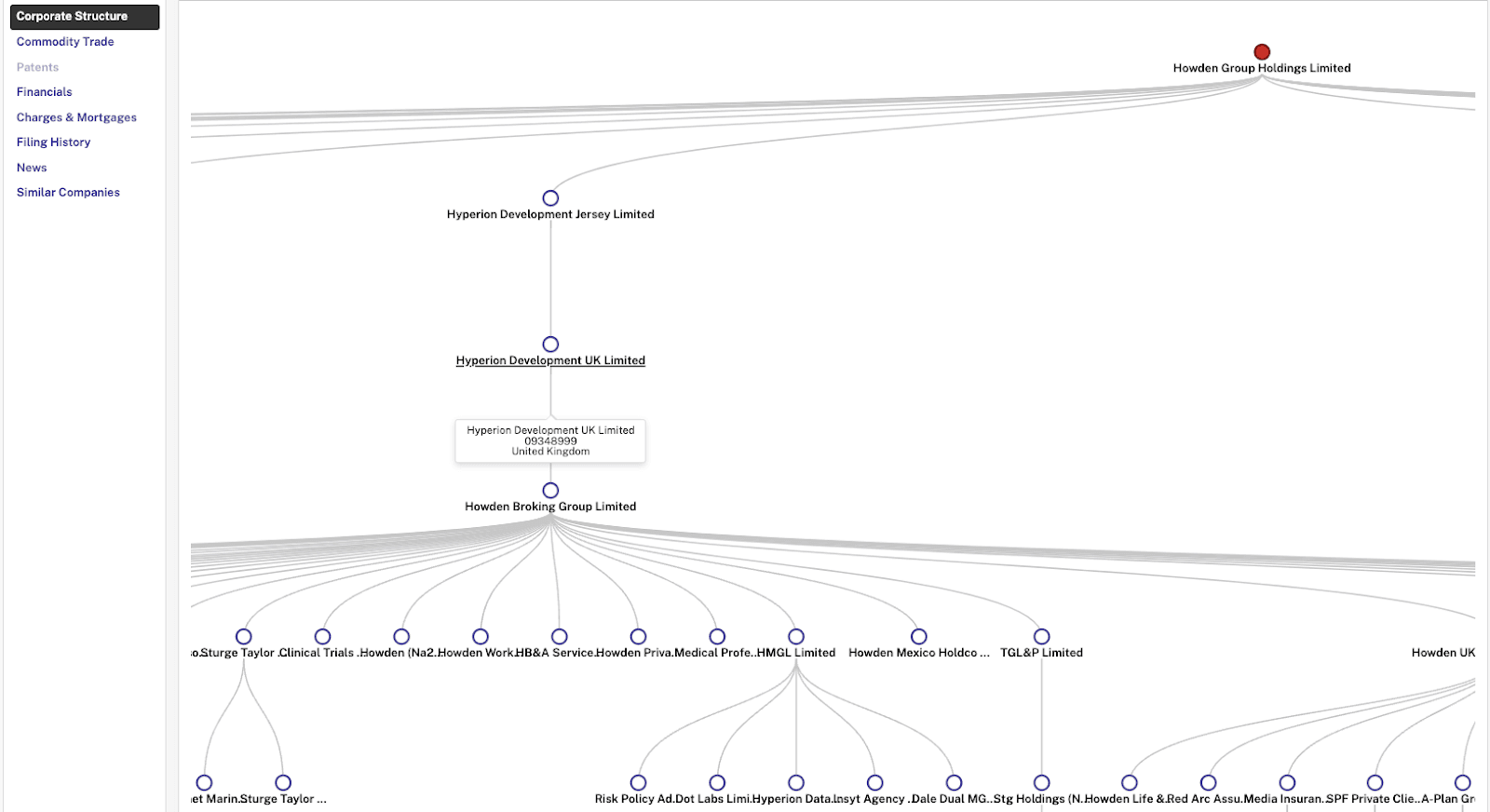
Beauhurst simplifies this process by allowing you to quickly check the jurisdiction of every entity within a corporate structure and identify the ultimate parent company. This comprehensive view of the entire ownership chain ensures that due diligence is both thorough and efficient.
2. Conducting a company health check
Understanding a company’s corporate structure is vital for due diligence. For businesses considering partnerships, investments, or acquisitions, assessing the health and legitimacy of a potential partner is crucial.
This includes checking the financial stability of the organisation and ensuring there are no hidden risks, such as ties to unregulated or high-risk entities.
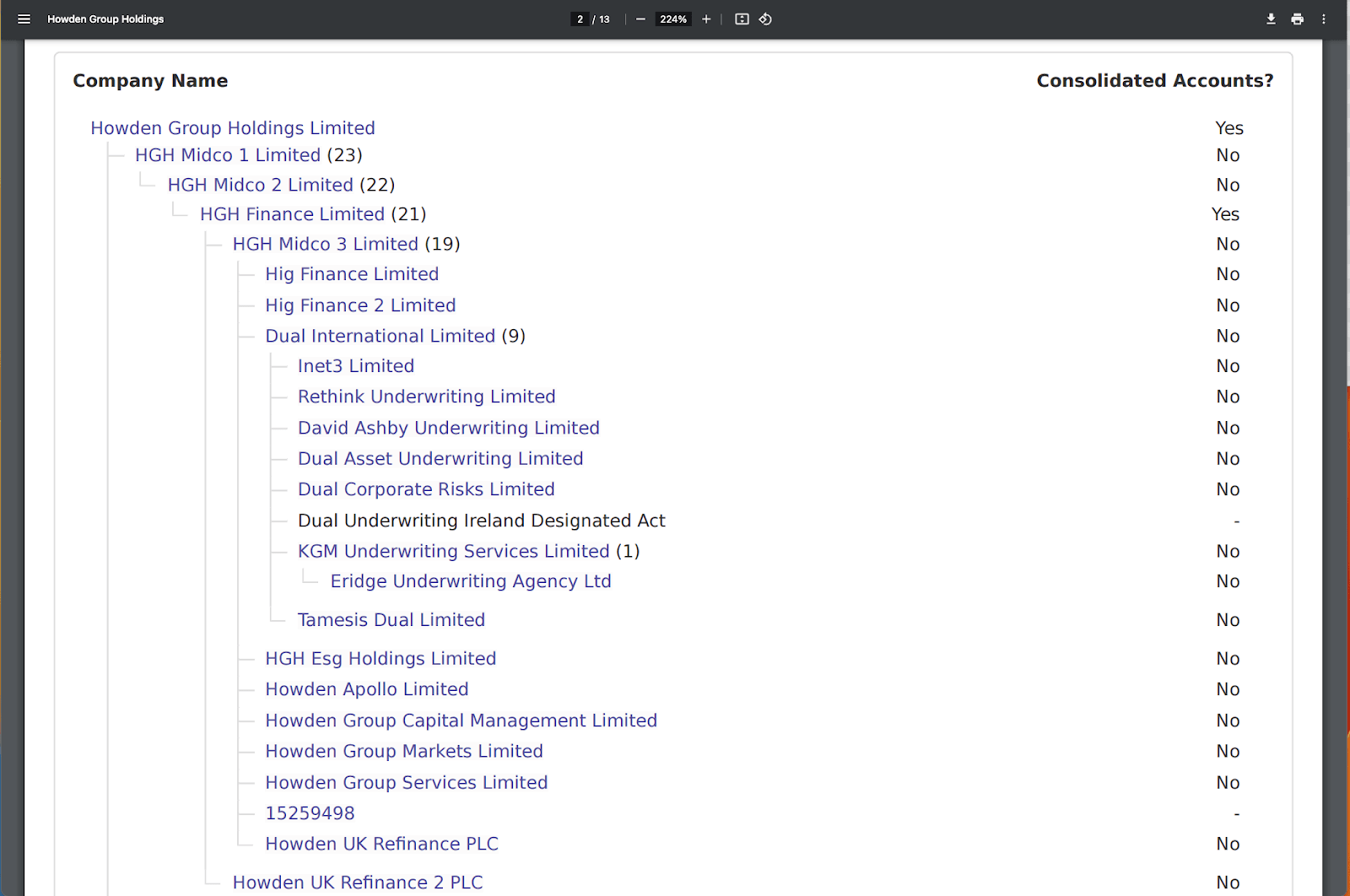
Beauhurst allows you to see where the accounts are consolidated, giving you a comprehensive view of the company’s financial health and where its reporting is centralised.
Beauhurst also flags risk signals that are critical for making informed decisions. For instance, the platform highlights County Court Judgements (CCJs), which can indicate a company has faced legal action for unpaid debts. This can be an early warning sign of financial instability or mismanagement. Similarly, the platform also tracks liquidation and insolvency statuses, which are clear indicators of a company being unable to meet its financial obligations.
Beauhurst links all related entities in a corporate structure, enabling you to assess risk factors and identify potential financial distress or liabilities across multiple subsidiaries and parent companies — all in one comprehensive view.