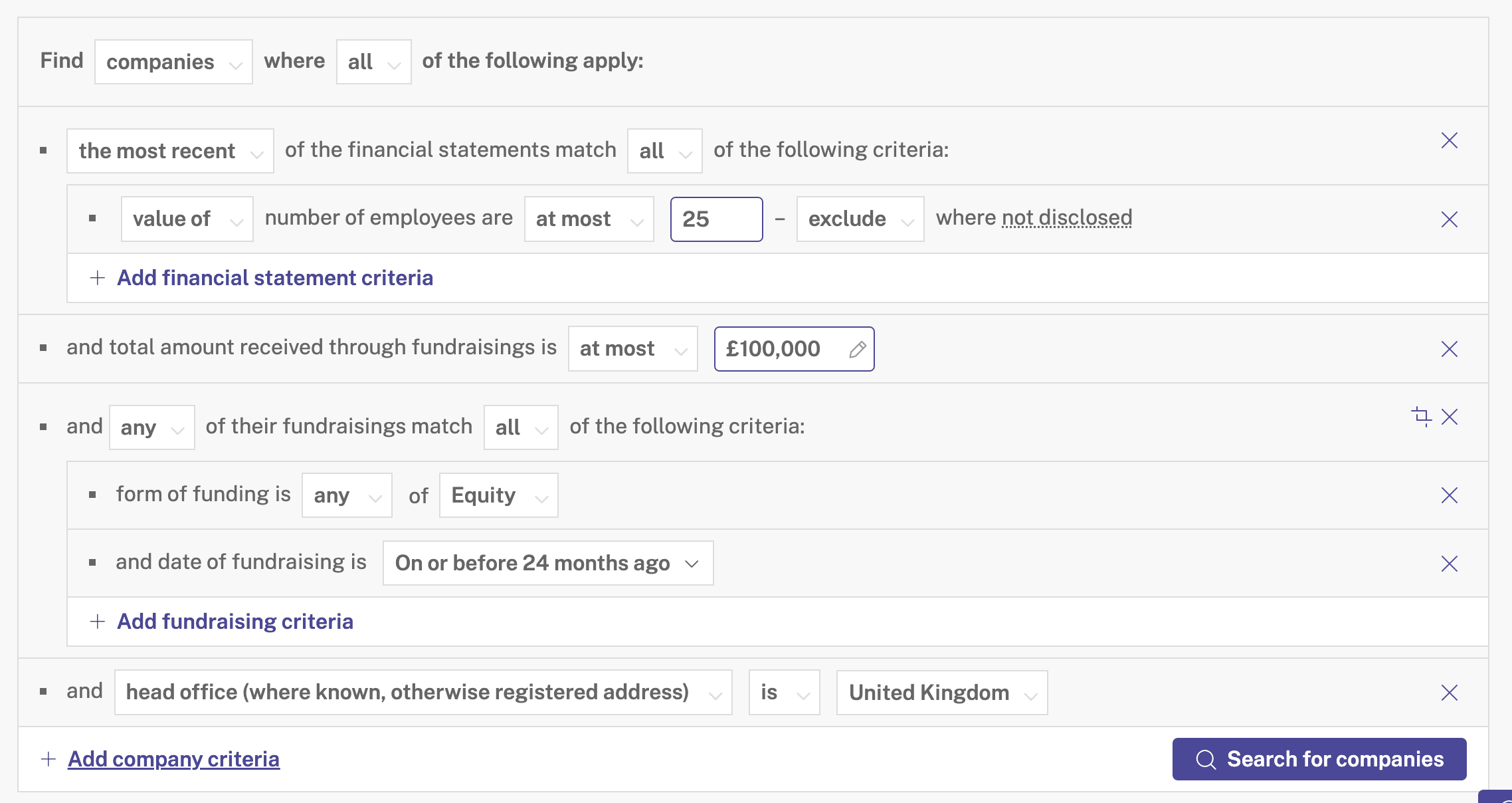
Investing in startups offers the potential for high returns and the chance to support innovative companies shaping the future. However, identifying the right opportunities can be challenging in an increasingly busy early-stage ecosystem. Finding startups with strong growth potential and aligning with your investment goals requires strategic insight and, of course, the right tools.
Various online platforms have made it easier to discover early-stage companies and invest in them. Yet, these platforms often focus on crowdfunding or broader deal sourcing, which is no good if you’re simply looking for early-stage investment opportunities. For a more comprehensive, data-driven approach, Beauhurst stands out as the go-to solution.
With the deepest datasets available on UK company performance, funding rounds, and industry trends, Beauhurst helps investors make better-informed decisions. In this article, we’ll explore the best strategies and tools for finding promising startup investment opportunities.
What makes a startup worth investing in?
Successful startup investments can lead to significant wealth creation, as some early-stage companies go on to become market leaders or achieve lucrative exits through IPOs or acquisitions.
However, the rewards come with inherent risks. Startups operate in uncertain environments, facing challenges like limited resources, unproven business models, and stiff competition. Many fail to achieve long-term viability, making it essential for investors to carefully evaluate opportunities.
This involves analysing market potential, the quality of the founding team, financial health, scalability, and competitive positioning. Understanding red flags and being mindful of industry risk can help mitigate some of these challenges.
With thorough research and strategic selection, investing in a startup can align with both financial goals and a passion for innovation. Let’s take a look at both of these in more detail.
Characteristics of high-potential startups
Strong market opportunity
A large and growing market with a clear problem the startup addresses effectively.
Innovative product or service
A unique, defensible offering that stands out from competitors, ideally patented with intellectual property or technological advantages.
Experienced and resilient team
Founders with relevant expertise, a successful track record, and the adaptability to overcome challenges.
Traction and metrics
Evidence of demand, such as user growth, revenue, or strategic partnerships, indicating market validation.
Scalability
The business model should support significant growth without proportional increases in costs.
Clear financials and exit strategy
Transparent financials and a realistic plan for achieving profitability or exiting via IPO, acquisition, or other means.
Red flags to avoid
Lack of market research
Startups without a clear understanding of their target audience or competitors.
Unrealistic projections
Overly optimistic financial forecasts without substantive evidence.
Weak leadership
Founders with limited experience or a history of poor decision-making.
High burn rate without traction
Excessive spending without significant progress in acquiring customers or generating revenue.
Legal and ethical concerns
Pending lawsuits, regulatory issues, or questionable business practices.
By focusing on startups with strong fundamentals and avoiding those with glaring risks, you can maximise your chances of a successful investment.