The life sciences sector covers companies that develop pharma, medical devices, and research tools and reagents that are based on scientific research of organisms. Recently it has been pulled into sharp focus in the fight against COVID-19, with a massive wave of medical technology, health technology and drug development in progress.
The United Kingdom is a world leader in the life sciences sector, with an incredibly varied portfolio of companies with a reported combined turnover of £4.9b. As it currently stands we track 865 of those life sciences startups and scaleups.
In this post, we’ve taken a look at the impact of COVID-19 on these companies and the wider life sciences industry. From the impact on everyday operations to jobs at risk and fluctuating investment figures, we examine how these UK startups are holding up.
Impact overview
The life sciences sector is one of the few sectors which has demonstrated growth in the past quarter. Unsurprisingly, this is in part due to the ongoing work in the search for a vaccine for COVID-19.
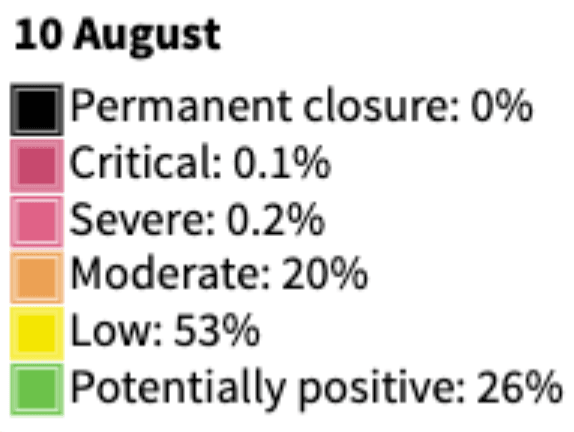
Across the landscape, 53% of life sciences startups are currently at low risk – considerably more than the wider ecosystem average of 42% – whilst an impressive 26% are potentially positively affected.
Our research has revealed that only 0.1% of life sciences companies are critically affected and 0.2% are severely affected by COVID-19. This is low compared with the current wider ecosystem, where 7% of high-growth companies fall into these categories. There have been no permanent closures.
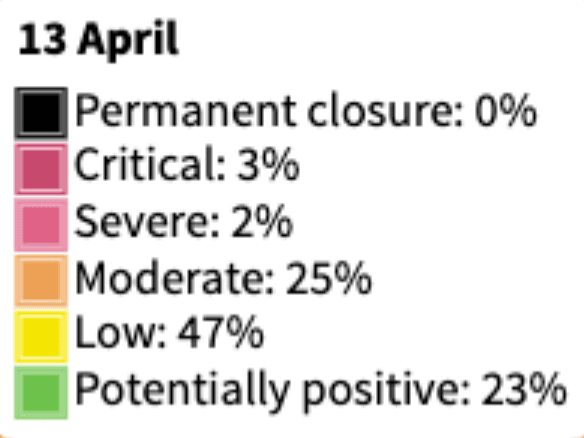
When comparing these stats with April (not long after lockdown measures were put in place in the UK) there has been a decrease in the number of companies critically and severely affected by the pandemic, whilst the number of potentially positively impacted companies has increased by three percentage points. This is a clear indication of signs of improvements within the life sciences sector.