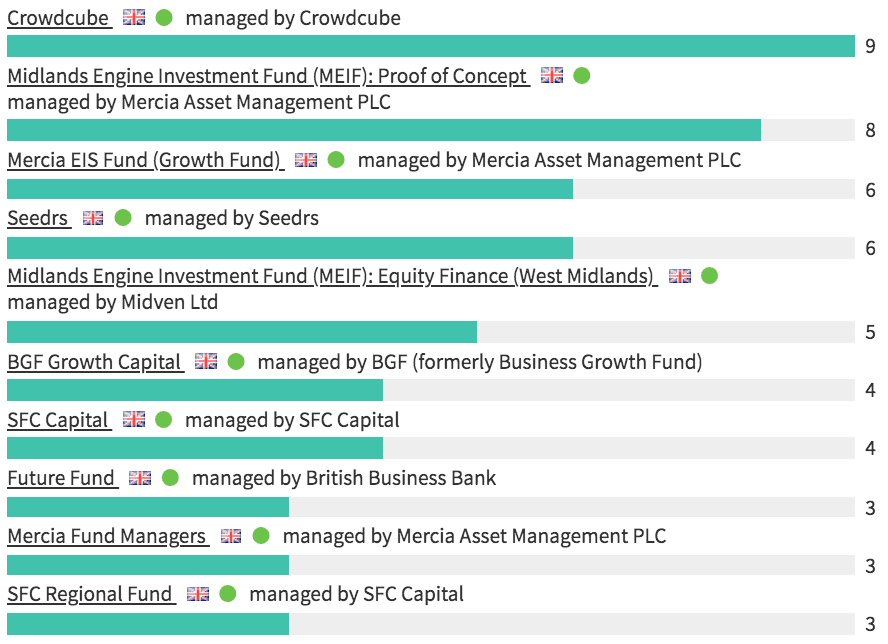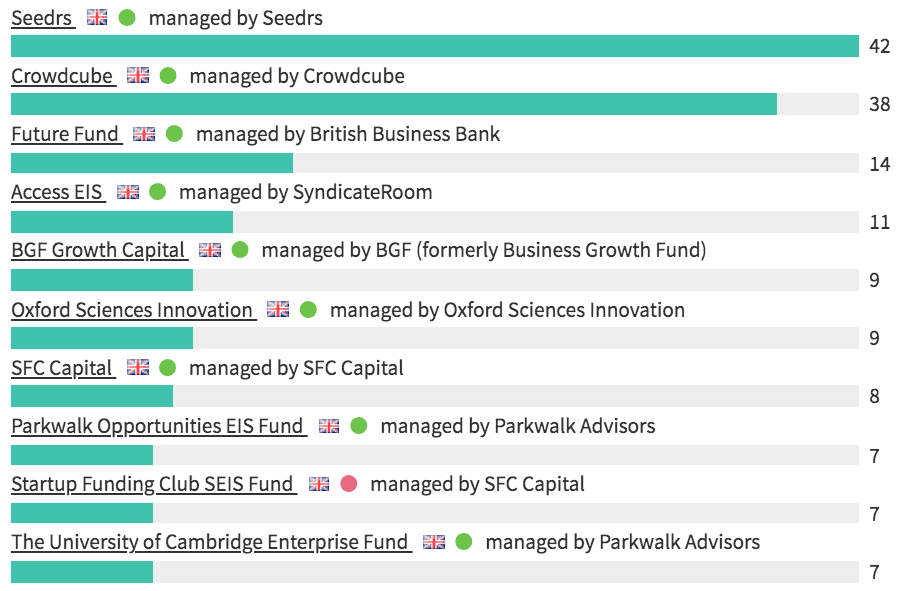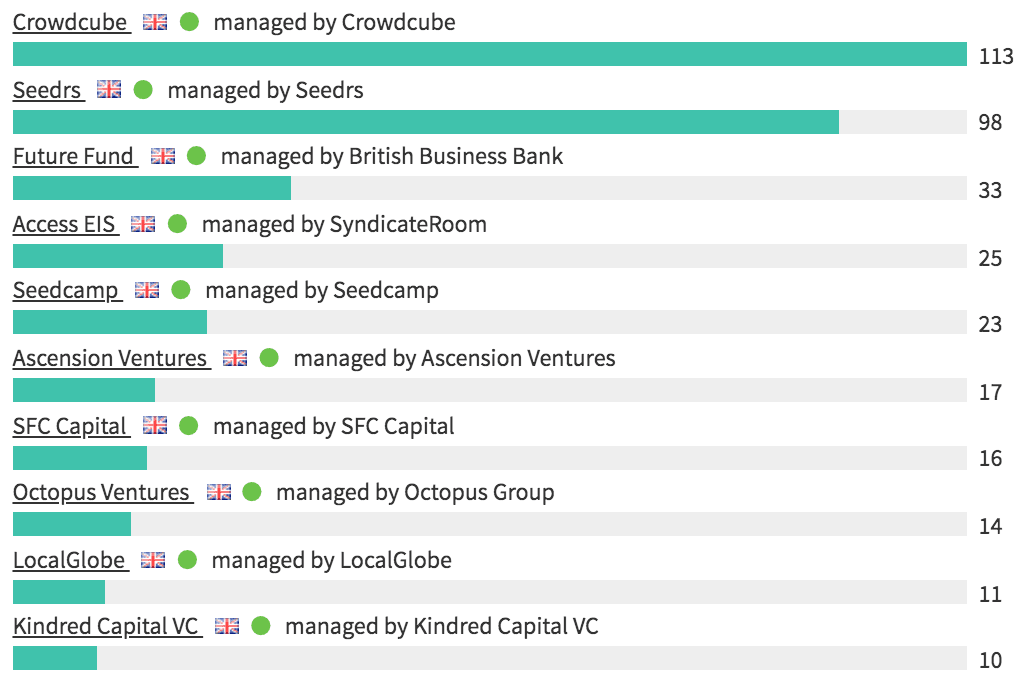
As new coronavirus restrictions came into play last week, three-quarters of people in the North of England and the Midlands are now living in tier three zones, compared to just 10% in the South of England. These latest measures have added to existing concerns that COVID-19 is increasing the country’s North-South divide.
Indeed, Clare Bambra, a public health professor at Newcastle University, has said that “health and wealth in the northern powerhouse lagged behind the rest of the country even before the Covid pandemic, and over the last year our significant regional inequalities have been exacerbated.”
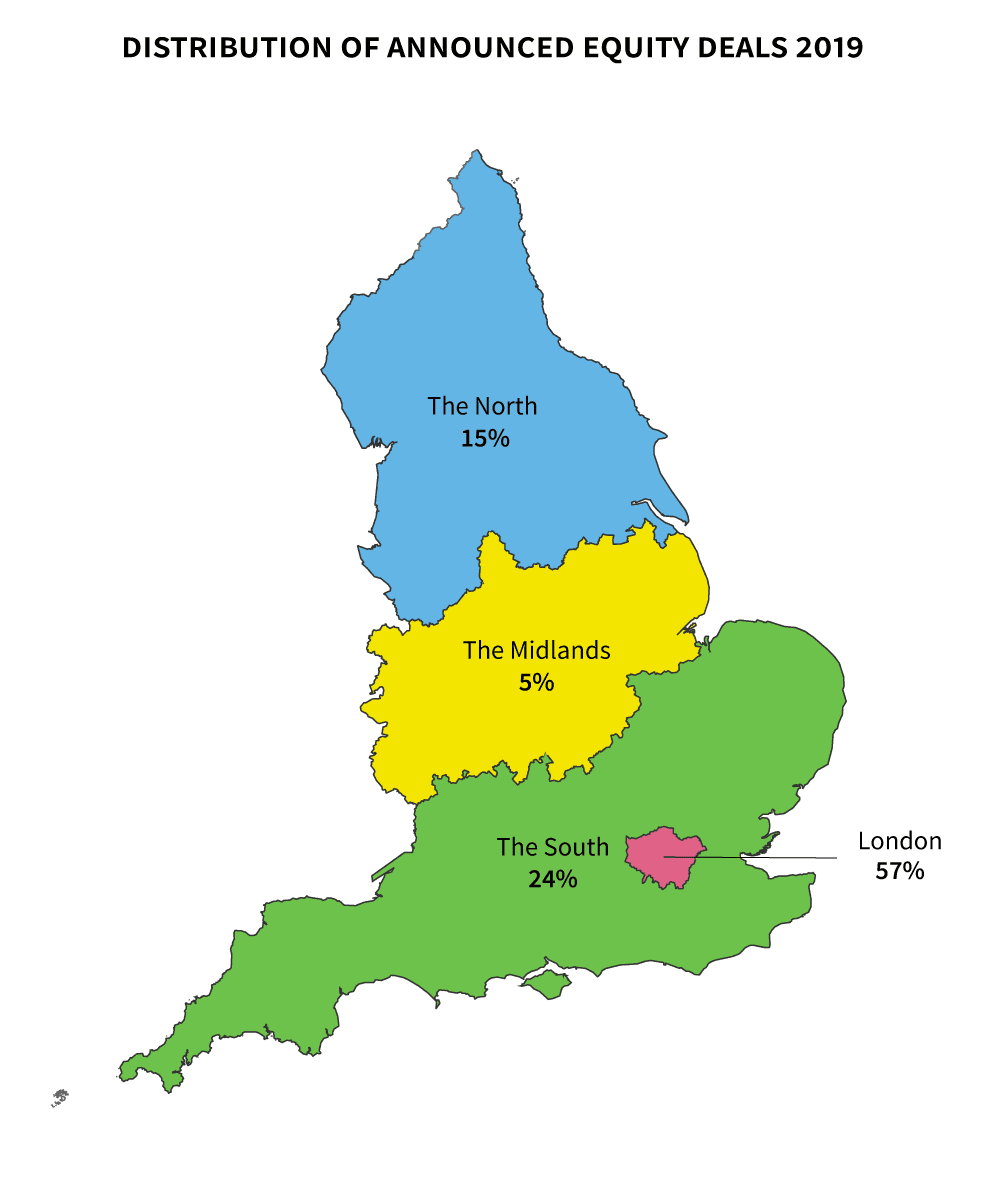
Of the 26,456 high-growth English companies currently tracked on our platform, 19% are based in the North of England (made up of the North East, North West, and Yorkshire and the Humber), and just 11% in the Midlands (East and West). In stark comparison, 32% are headquartered in the South (the South East, South West, and East of England), and 38% in London alone.
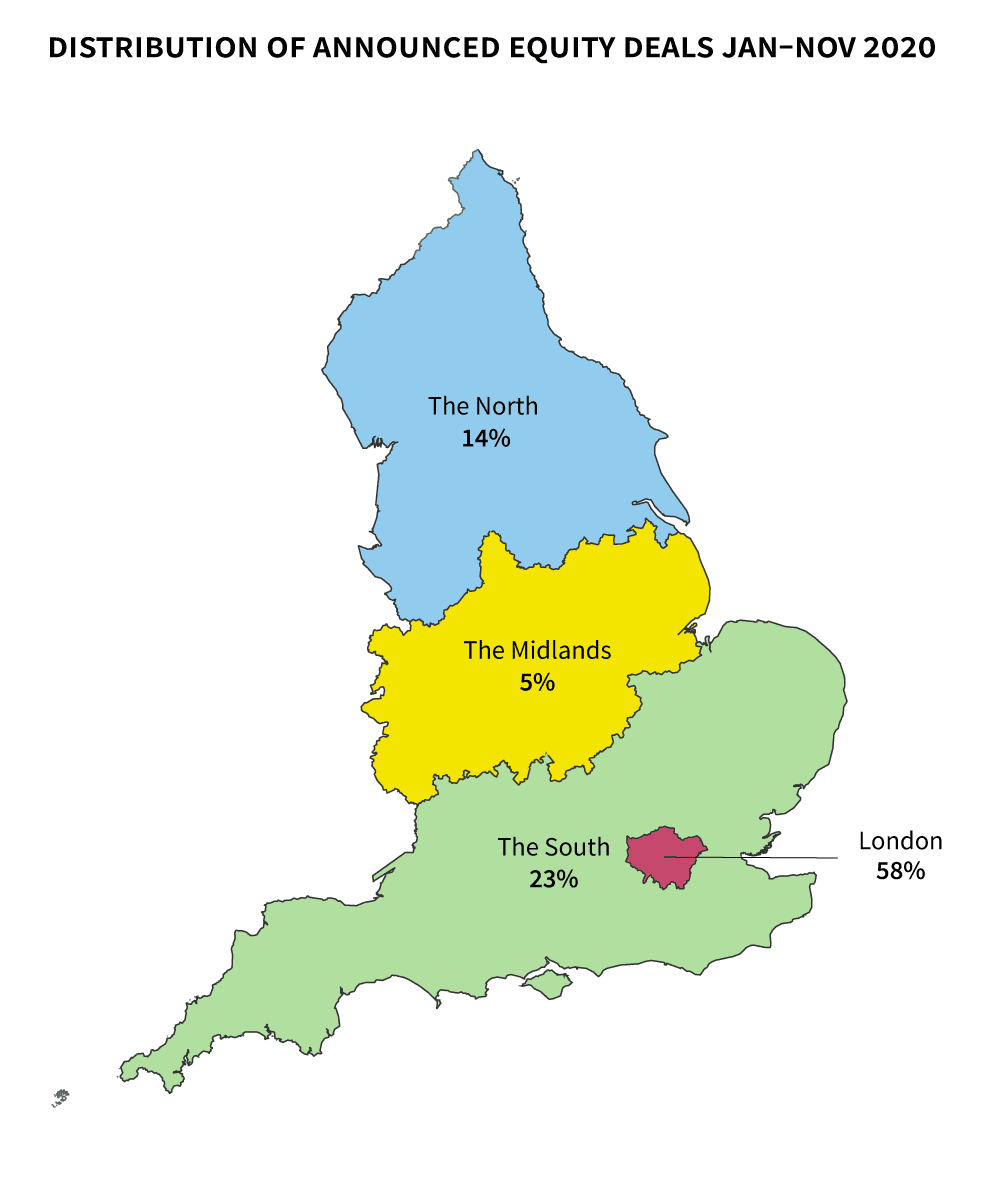
In keeping with this trend, southern regions also receive a far larger proportion of equity investment each year, even when taking London out of the equation. Many have argued that, after a decade of spending cuts, what the North needs most right now is a fairer share of investment, from both private and public funds, as well as additional support from government-backed schemes like the EIS.
So, as this challenging year comes to a close, how have regional funding landscapes in England changed? And has COVID-19 worsened the already troubling disparity in investment between North and South?
Deal numbers
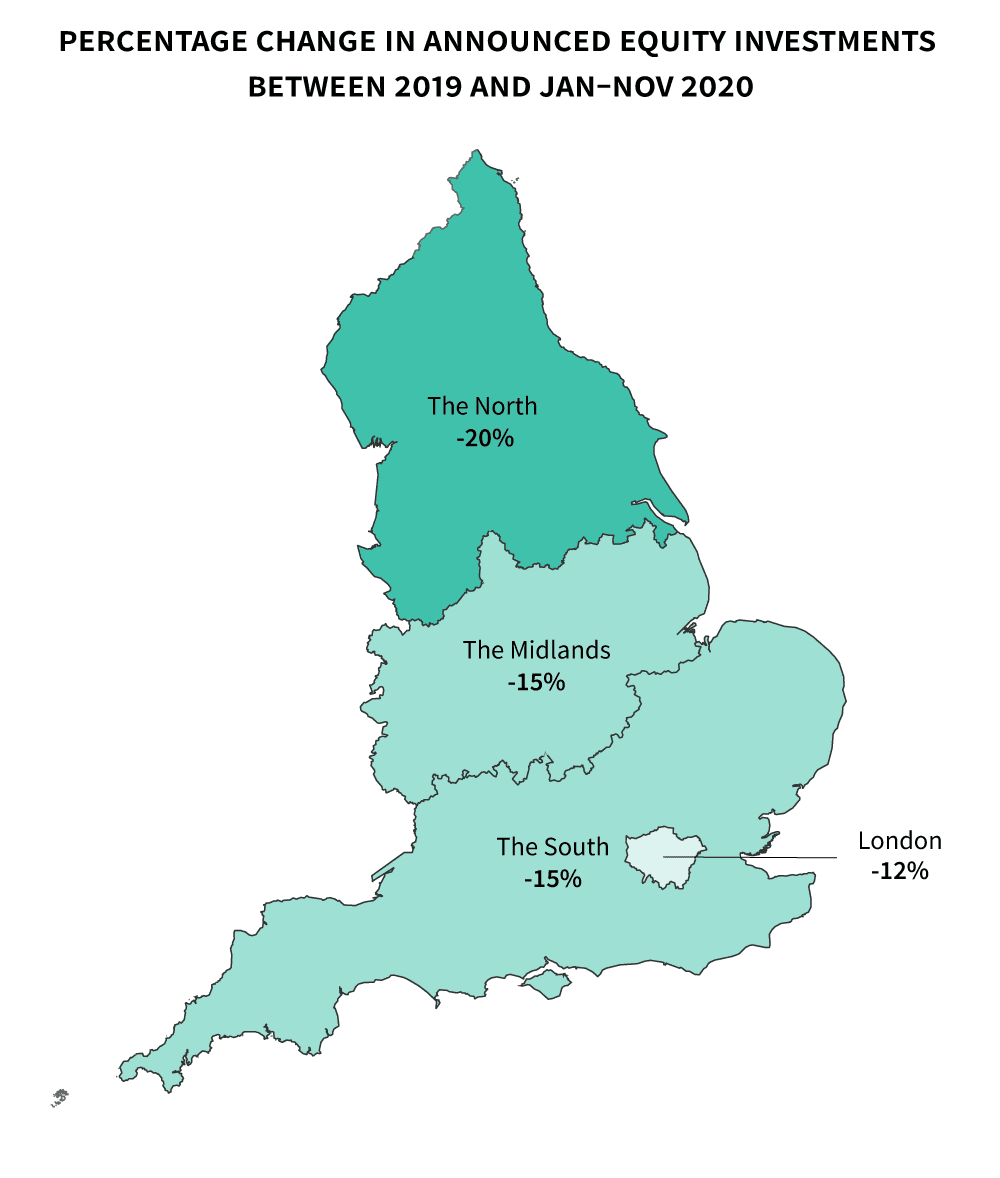
The number of announced equity deals secured by high-growth companies has gone down in nearly every region between 2019 and 2020.