The healthcare and life sciences sectors have come under increased scrutiny during the pandemic. Global and national bodies, as well as private healthcare providers, have called for increased focus and government spending into healthcare services, encouraging widespread digital transformation of the healthcare industry.
But public money isn’t the only channel of finance for healthcare companies. Healthtech startups are increasingly in need of equity investment to drive such digital transformation. In addition to the COVID-19 focussed innovations, there is ongoing development of novel technologies and medical services to support a variety of health conditions, both in terms of physical and mental health.
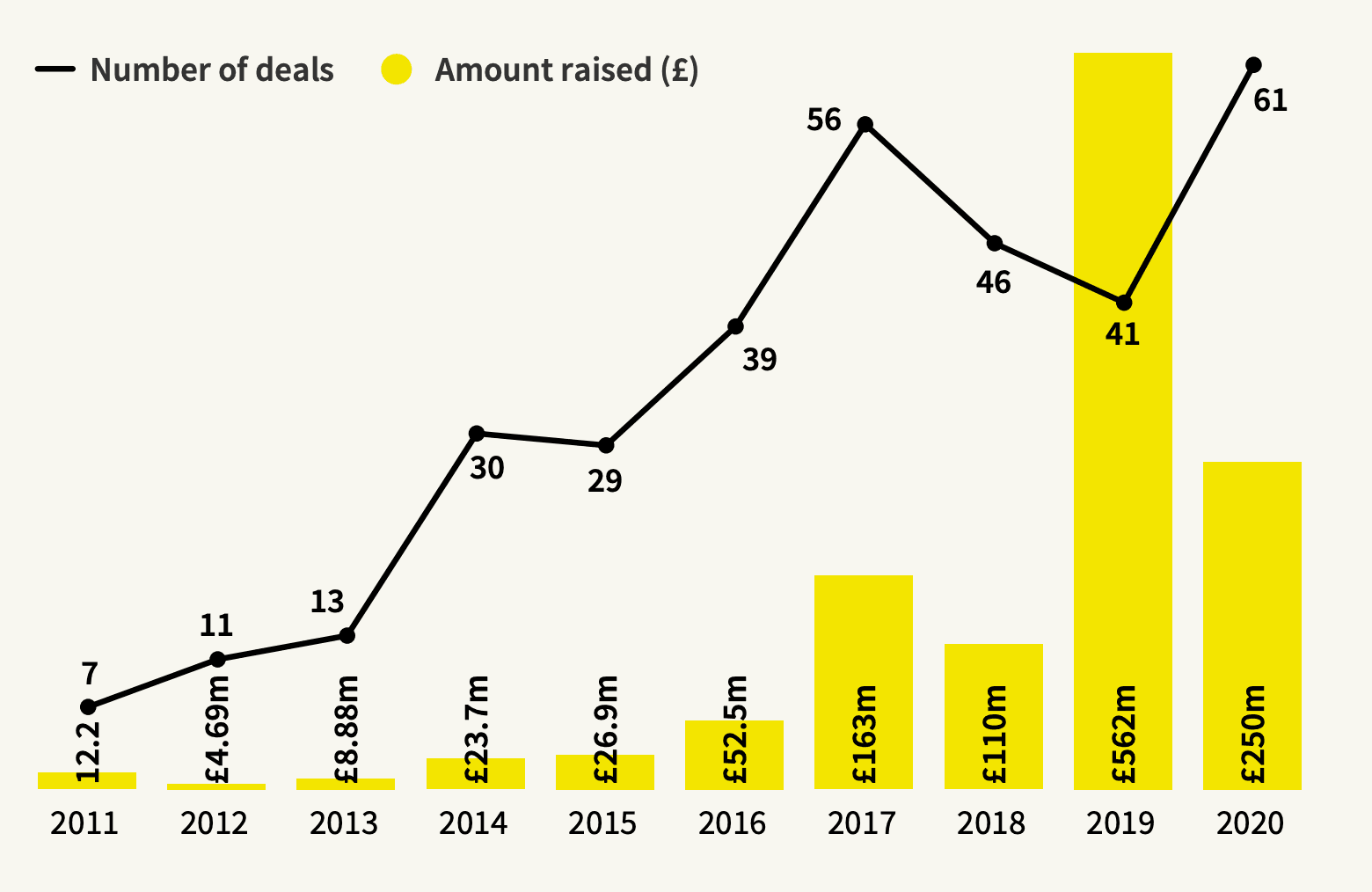
Several of these have attracted investors whose money can support further research and scaling to meet pandemic demand. While 2020 was a record high for investment into UK pharmaceutical companies, the year was also interesting for other health sectors for investment both related and unrelated to COVID-19. Unlike pharmaceuticals, not all sectors of the healthcare industry fared well over 2020, such as MedTech, while alternatively, health technology (healthtech) is on the rise.
In this article, we look at the medtech and healthtech sectors, examining the startups that raised the largest funding rounds in 2020 and whether that capital will go towards fighting the pandemic or for other healthcare endeavours.
An overview of MedTech and the top companies in the sector
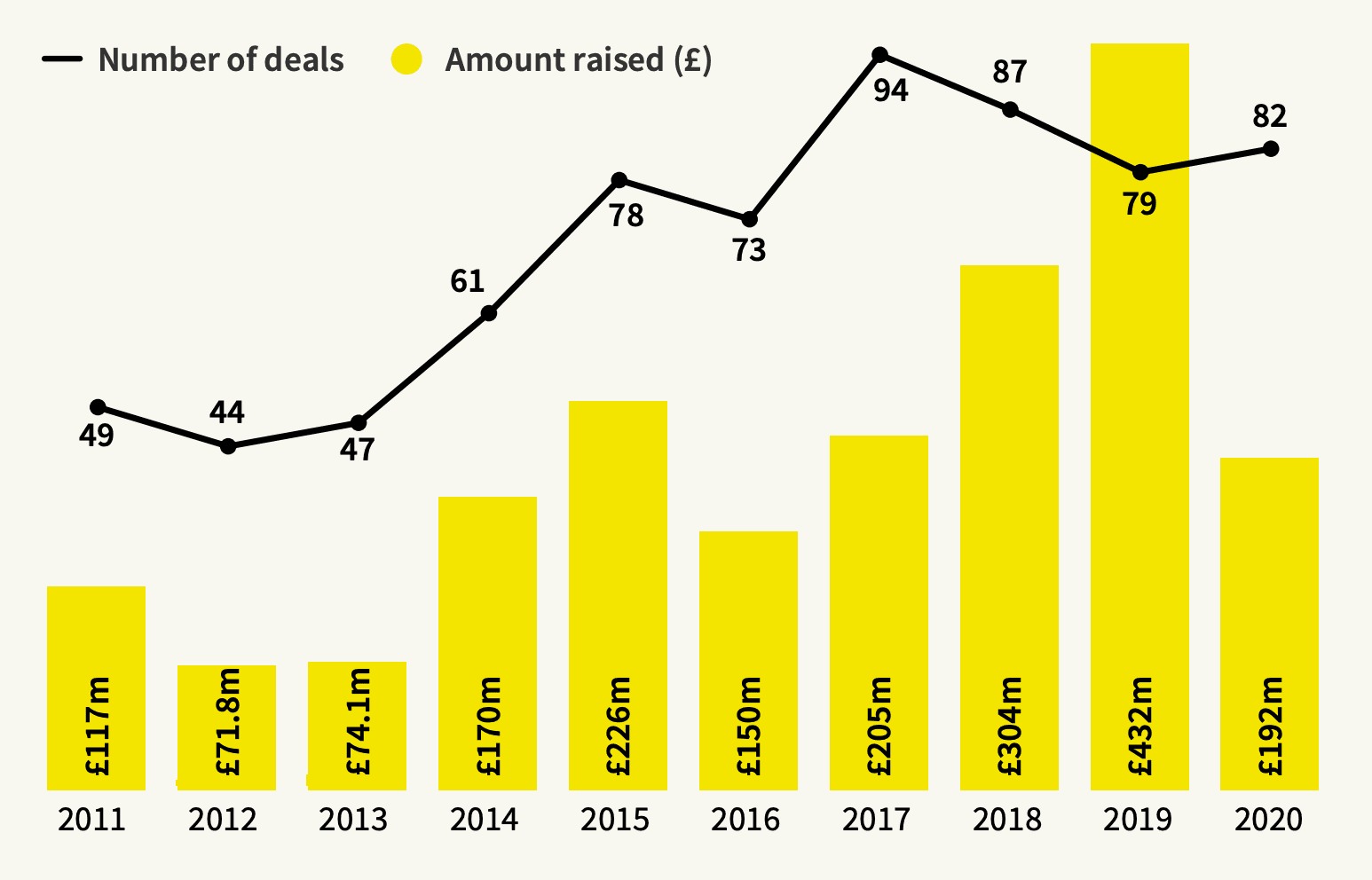
Covering clinical diagnostics, medical devices and instrumentation (but not drug discovery and pharma, which remains a separate sector outside this analysis), MedTech is vital to all stages of healthcare, from prevention and diagnosis to treatment and care. Without counting the government’s Future Fund, the sector raised £193m of investment across 82 funding rounds in 2020.
Some of these investments were indeed secured by technology companies with innovations that fight the pandemic. One such innovator is Iceni Diagnostics, a University of East Anglia spinout which has developed a rapid lateral flow test for COVID-19 that gives results in just 15 minutes. The test resembles a pregnancy test with its ‘red line’ functionality, and was first backed by a small Innovate UK grant in May 2020. In December, Iceni Diagnostics received £2m of equity investment to build commercial infrastructure and take on more staff. Co-founder Professor Rob Field stated that “There’s a vast, global potential in the application of our unique technology. We are using it to tackle COVID now, but it will also produce better vaccines and new diagnostic and therapeutic products in the future.”
Cambridge Respiratory Innovations has received eleven grants since founding in 2013, but 2020 was its first year for equity fundraising, securing £1.7m across two rounds last year. The company is currently working with NHS Trusts to supply its handheld monitoring device, N-Tidal, for use across the health system, helping to identify when a patient with COVID-19 is deteriorating and signalling to care teams if they require ventilator support.
Surprisingly however, it seems that the largest investment rounds into MedTech in 2020 were not related to COVID-19. Biotech and life sciences firm Bit Bio raised £32.6m in June, at a pre-money valuation of £77.6m. The company is developing research tools and technologies where human cells are reprogrammed and produced for cell therapy. The second largest investment, worth £28.7m, went to University of Oxford spinout Perspectum, which delivers technologies to aid in the diagnosis and care of patients with liver disease.