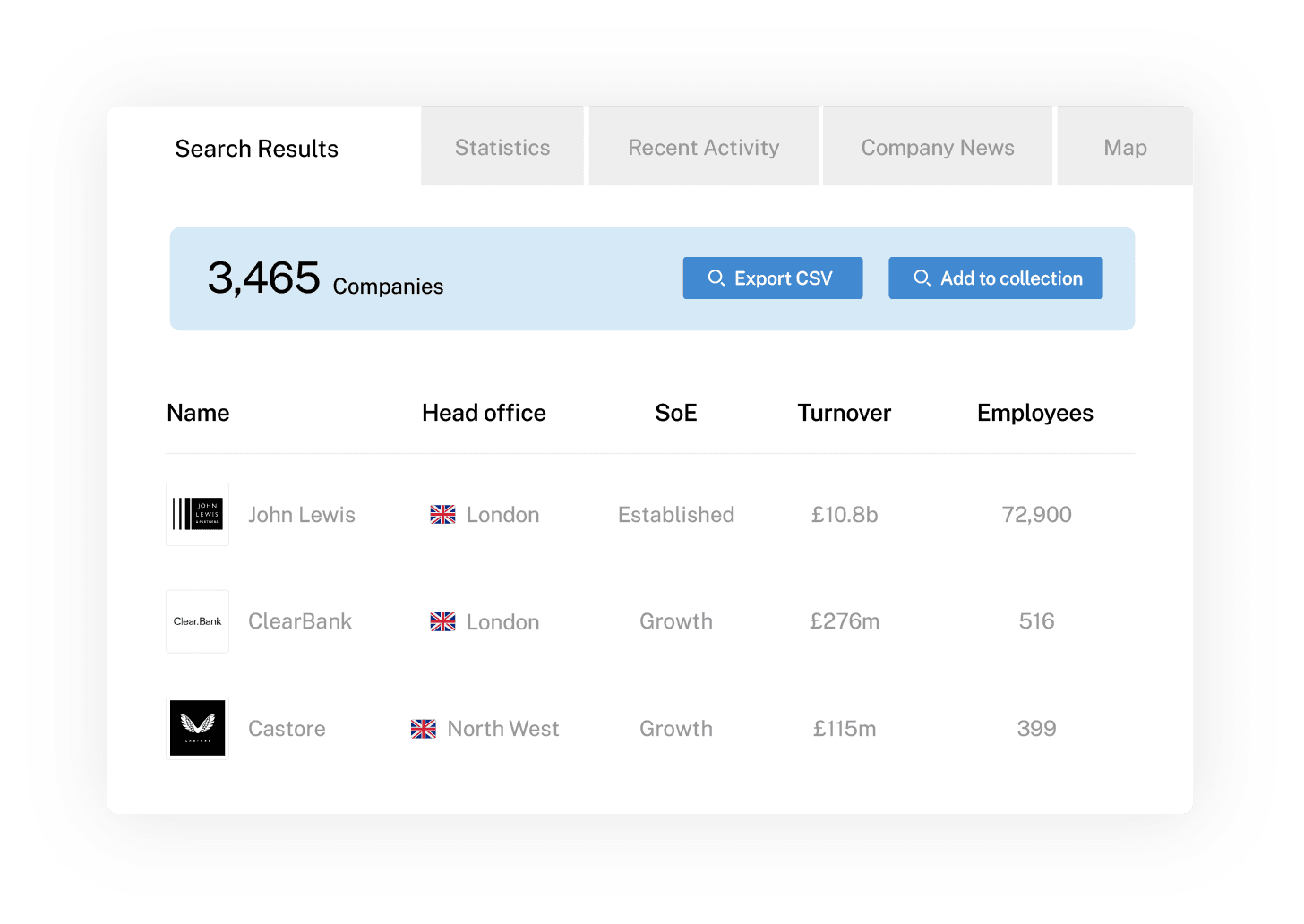
FINN is a fast-growing automotive company based in Munich, offering flexible car subscription services that include insurance, tax, maintenance, and delivery under a single monthly fee.
Founded with a mission to make mobility easy and sustainable, FINN offsets the carbon emissions of every car it places on the road, including petrol and diesel vehicles. The company has rapidly scaled operations across Germany and the US, with a current fleet of more than 25,000 vehicles.
In 2022, FINN raised $110m in a Series B round to expand into the US market. In early 2025, it secured up to €1b through an asset-backed securitisation facility (ABS II), designed to fund further fleet growth while keeping its model debt-financed rather than equity-dilutive.
With a turnover of €461.2m, the company has positioned itself as a modern alternative to traditional car ownership and leasing, blending embedded insurance, digital convenience, and climate responsibility.
Zürich Beteiligungs‑AG serves as the German holding company for Zurich Insurance Group’s operations in Germany. This includes both life and non‑life insurance businesses under the Zurich Gruppe Deutschland banner, offering products such as property, motor, health, legal protection, travel, and life insurance.
Headquartered in Frankfurt, it employs roughly 4,400 people, with annual premiums in the region of €5.9b as of 2021. The €905.1 m turnover figure reflects Zurich’s German holding entity itself.
Since early 2024, Zurich has consolidated its European operations under Zurich Insurance Europe AG, with its legal headquarters moved to Frankfurt. The insurer is regulated by BaFin and writes non-life business across Germany and multiple EU member states via 11 branches.
Zurich Gruppe Deutschland remains one of Germany’s top 10 insurers, with strong market presence in unit-linked pensions and biometric risk products. It partners with Deutsche Bank and Postbank for retail distribution, a decade-long alliance renewed and expanded in 2023 to include Postbank customers as well.
In 2024, Zurich announced a significant acquisition of AIG’s personal travel insurance and assistance business for $600m. This deal boosts the combined Cover‑More Group to approximately $2b in annual travel premiums, strengthening Zurich’s worldwide footprint in travel insurance markets.
W&W Group is a major German financial services and insurance provider formed from the 1999 merger of Wüstenrot (building society and banking) and Württembergische (insurance). The group offers a broad product range, including property & casualty, life, health, and pension insurance, alongside its Bauspar banking business. With around 13,000 employees and 6.5 million customers, it serves clients nationwide through over 2,000 branches and service centres.
In 2024, the insurance business achieved strong premium growth: Property & Casualty underwriting rose to €2.77b (+7.2%), while Life & Health premiums grew by 6.2% to €1.30b.
Overall turnover for the group reached €5.98b. In early 2025, Württembergische insurance saw new premium inflows grow across motor, corporate, and health lines, with motor premiums up 8.2% and health insurance new business rising 14.9% year-on-year.
Allianz’s core business spans property & casualty (P&C), life and health insurance, and asset management. Within Germany, Allianz Deutschland AG oversees the domestic operation, which collectively writes over €161b in premiums across all insurance lines, making it the country’s largest insurer.
The group employs more than 156,000 people worldwide and serves over 100 million customers across nearly 70 countries. Its asset management arms, Allianz Global Investors and PIMCO, manage around €1.9t in third-party assets.
Allianz is also advancing into digital innovation. The company is piloting AI-powered claims processing in pet insurance, with automatic payment approvals in under four hours, and expanding usage of machine learning to streamline operations.
InterRisk is the German-based accident and property insurer within Vienna Insurance Group (VIG), headquartered in Wiesbaden. The firm offers a diverse range of products including accident, personal liability, household contents, building, disability, and life insurance, distributed exclusively via more than 10,000 independent brokers and insurance advisors across Germany and Austria.
As a wholly-owned subsidiary of Vienna Insurance Group, InterRisk plays a crucial role in VIG’s German portfolio. VIG itself recorded gross written premiums of €15.2m in 2023, achieving a 7.9% increase in the first half of 2024 compared to prior year. Within Germany, standalone InterRisk delivered a turnover of €3.13b, underlining its strength in the intermediary-focused segment.
Hannover Rück SE is one of the world’s leading reinsurers, a core subsidiary of German financial services group Talanx AG, written out of Hannover. It handles both property & casualty and life & health reinsurance lines, serving clients on all five continents.
In 2024, the company reported gross premiums of approximately €26.4b across its global operations, including €33b in broader group volume. The German domestic business is managed by its subsidiary E+S Rück.
Known for its strong financial ratings (Hannover Re holds an A+ (Superior) from AM Best and AA‑ (Very Strong) from S&P) it’s one of the most reliable names in reinsurance worldwide. In 2024, Thorsten Steinmann — formerly of Swiss Re — was appointed to Hannover Re’s Executive Board, taking over as CEO of E+S Rück effective January 2025.
With nearly 3,900 employees and over 170 subsidiaries and offices globally, Hannover Re continues to expand its footprint through strategic partnerships and a focus on innovation in risk management. As part of its repositioning strategy, it is set to exit the investor consortium behind life insurer Viridium Group later in 2025.
Südwestbank – BAWAG AG Niederlassung Deutschland operates as the German branch of BAWAG Group, one of Austria’s largest banking institutions. While it functions primarily as a regional commercial bank, it plays a key role in distributing insurance products to individuals and SMEs across Germany.
The bank collaborates with a range of insurance providers, including R+V Versicherung and other major players, to offer its customers access to a full suite of financial services, including life, health, property, and business insurance. These insurance products are typically embedded into its broader financial advisory services, particularly for private wealth clients and mid-sized businesses.
While Südwestbank itself is not an underwriter, it acts as a trusted intermediary, enabling clients to manage both banking and insurance needs in one place. Its inclusion in this ranking reflects its substantial turnover and influence in the financial services sector, rather than a traditional underwriting role. As part of the BAWAG Group’s strategy, the integration of bancassurance offerings positions the bank as an important link between consumers and Germany’s insurance ecosystem.
Munich Re is the world’s largest reinsurer and a cornerstone of Germany’s insurance sector. Operating in more than 50 countries, the group writes both life and non‑life reinsurance, while its primary insurer arm, ERGO, serves retail and corporate customers.
In 2024, Munich Re generated around €60.8b in insurance revenue, with a consolidated net profit of €5.67b, marking the fourth consecutive year the company exceeded its profit target of €5b. The board has proposed a dividend of €20 per share, representing a 33% increase year‑on‑year, along with a planned €2b share buyback programme.
The group holds an exceptionally strong capital position, with a Solvency II ratio of 287% and €32.8b in equity as of 2024. Munich Re continues to expand into emerging risk areas like cyber insurance, where its premiums grew to €1.6b by end‑2024, up from just €500m five years ago.
Despite significant exposure to climate-related events — including €1.2b in claims from the California wildfires in early 2025 — Munich Re reaffirmed its 2025 profit guidance of €6b, underscoring its resilience and financial discipline. The company plans to return €4.6b to shareholders in dividends and buybacks in 2025.
With over 43,500 employees (including its ERGO and MEAG asset-management divisions), Munich Re’s integrated business model spans reinsurance, primary insurance, and investments. Its scale, innovation in areas like renewable energy liability and embedded risk, and global footprint make it fundamental to both the German and global insurance ecosystems.
Helvetia is a European all-lines insurer serving customers across Switzerland, Germany, Austria, Italy, and Spain. In Germany, Helvetia operates through its German holding, offering both life and non-life insurance products via local subsidiaries.
In 2023, its German operations generated approximately CHF 988m in written premiums, accounting for around 8.7% of the group’s total business volume of CHF 11.6b. Globally, Helvetia reported CHF 11.55b in business volume for 2024 (up from CHF 11.31b in 2023), driven by strong growth in its non‑life segment and resilience across European markets, including Germany.
Helvetia’s capital position remains robust, with a Swiss Solvency Test (SST) ratio of approximately 290%, among the best in European insurers. Its 2024 group net income stood at CHF 501m, with strategic growth supported by fee businesses and embedded insurance products across Europe.
In April 2025, Helvetia announced a merger with Baloise Holdings, creating a combined group with estimated business volume of CHF 20b, pending regulatory approvals in Switzerland and Germany.
Würzburger Versicherungs‑AG is a specialist German insurer based in Würzburg, offering liability, accident, property, and travel health insurance to individuals and households. The insurer focuses on small‑ticket products and collaborates with intermediaries like DR‑WALTER for product distribution and service fulfilment.
Its primary business model centres on travel insurance (e.g. “Expat Visit”) and supplementary liability or accident cover for temporary stays, often marketed through partners like BDAE and DR‑WALTER. While not a major insurer in terms of policyholders or product breadth, Würzburger serves a niche market segment and illustrates the diversity of Germany’s broader insurance landscape.