The UK government provides two commonly-used, albeit limited, sources of UK business data. One is the Companies House listings—the business registry to which UK-based companies are obliged to submit basic information. The other is the Office for National Statistics (ONS)—an aggregator of data on UK business and society.
These can be useful resources (and actually, the UK is ahead of other countries in making this data accessible), but they come with significant drawbacks:
- They’re not always completely up-to-date. ONS publishes bulletins on business activity, size, and location at intervals throughout the year. Meanwhile, businesses have nine months to submit their annual accounts to Companies House. This means there’s often a lag between changes in a business ecosystem and the data you see.
- They don’t give a fully accurate picture of the business landscape. A lot can change between the ONS’s sporadic publications. Plus, Companies House is explicit about the fact that it “does not verify the accuracy of information filed” by businesses.
- These platforms are not easy to use. The ONS publishes certain graphs and visualisations, but you’ll need to download a CSV file to dig into the data beyond that. And many users find the Companies House search function to be pretty tough to navigate. For example, you can only search industries by Standard Industrial Categorisation (SIC) codes, which haven’t been updated since back in 2003.
- There are limits to the data you’ll see. The ONS provides a general overview of key statistics and trends, such as overall business population estimates. Meanwhile, Companies House only features data on legal entities—not actually operating companies—and it lacks information about key people, operating locations, and more.
In summary, this means that if you’re looking for really specific data on particular industries in particular areas, it’s difficult to find the information you need (e.g. startups in Manchester, or robotics companies in Oxfordshire). Plus, when you don’t know if your data is accurate, it’s a huge drain on time and resources to sort through and verify the information.
Luckily, there’s a much easier way to find accurate and up-to-date UK business data with Beauhurst. Our platforms have rich, verified data on every active private company in the UK.
In this guide, we show you how you can use Beauhurst to:
- Access up-to-date UK business data by region, industry, and more
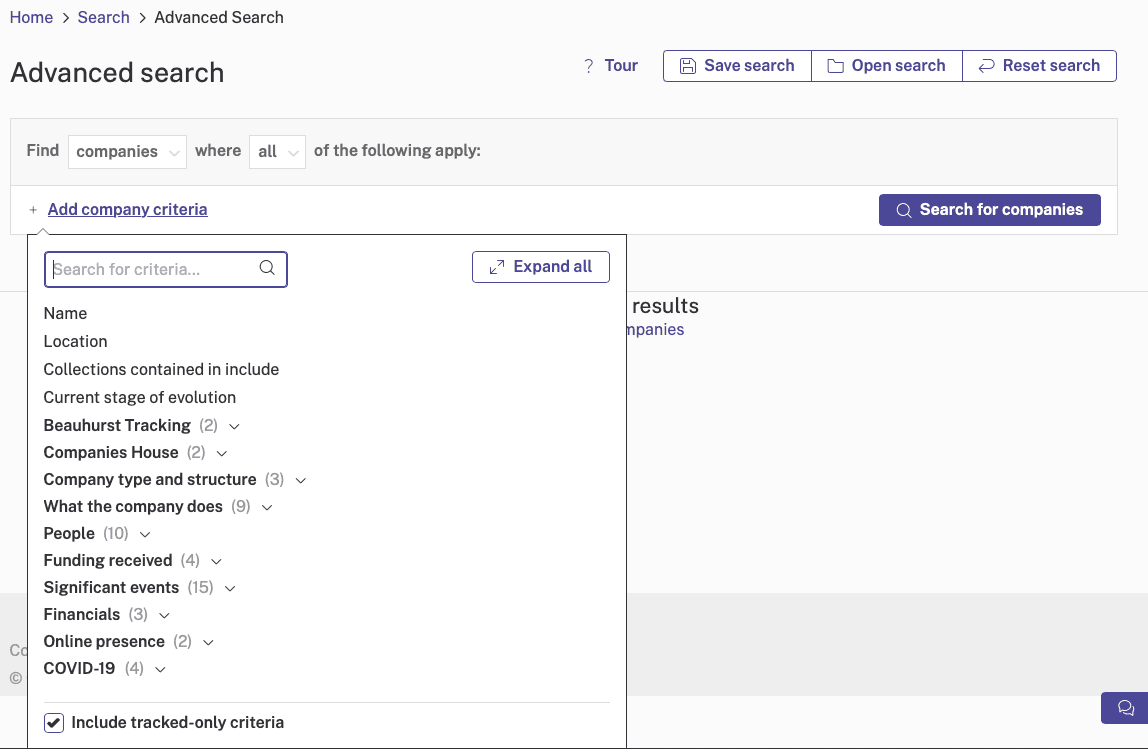
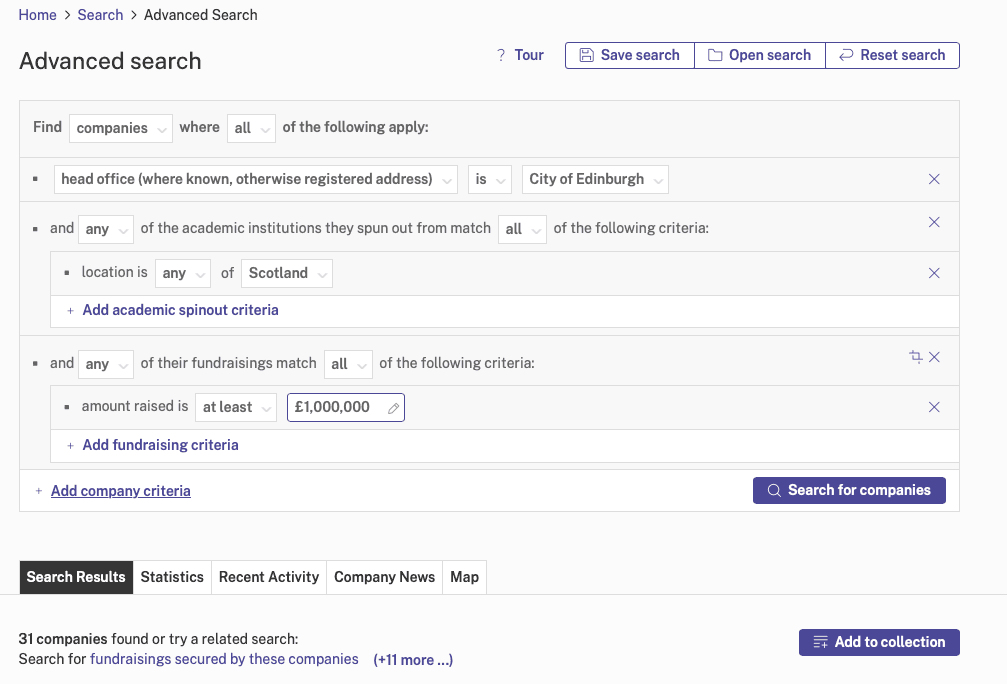
- Search for individual companies using highly specific criteria
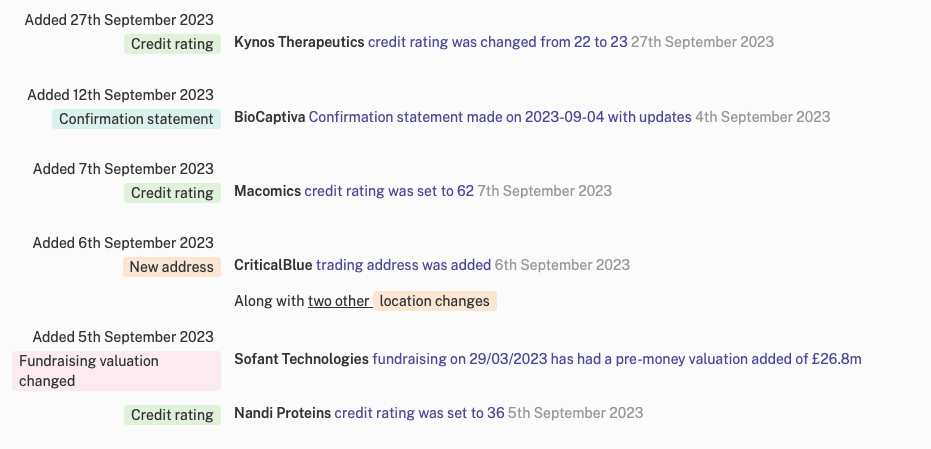
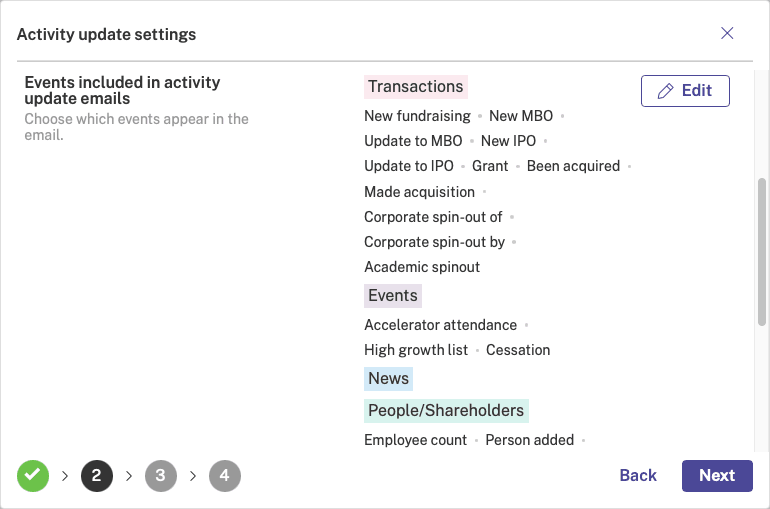
- Be the first to hear about changes in the business landscape
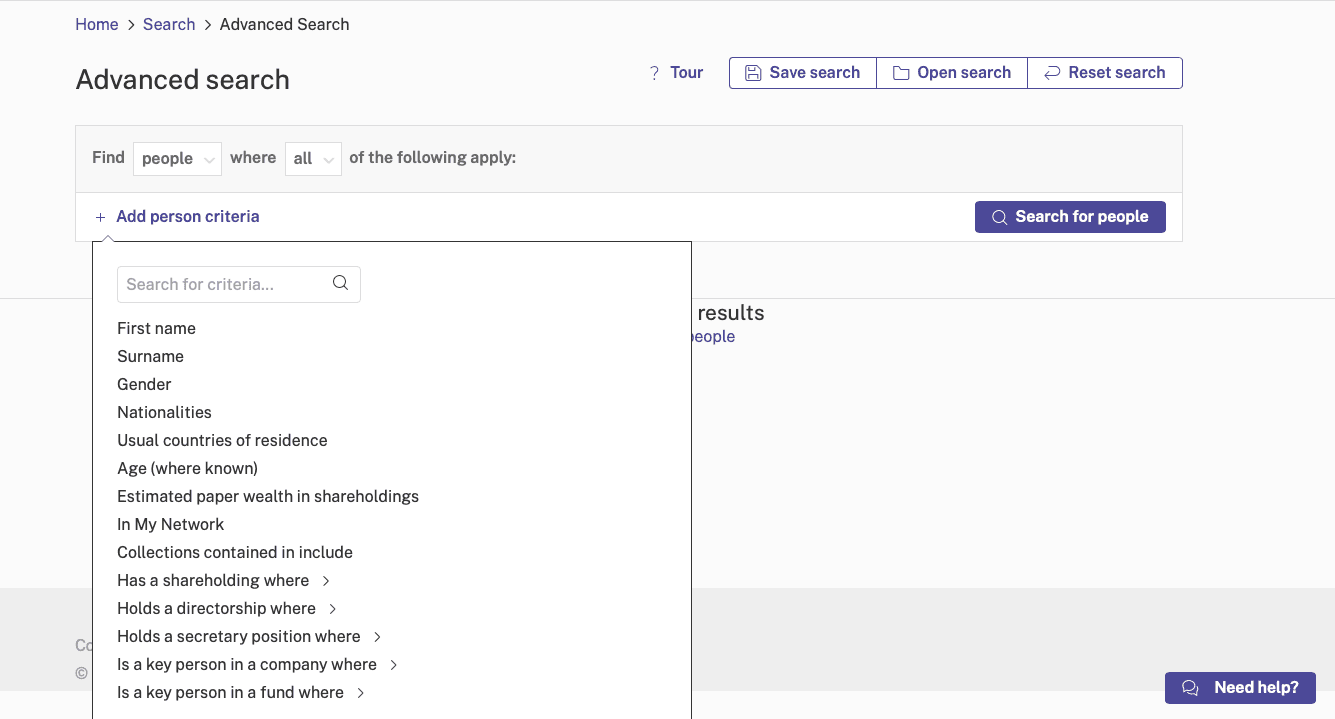
- Find information on influential individuals and more
You can access Beauhurst data through our platforms designed specifically for universities and governments, financial and professional services, investors, and sales teams. Read on to find out more or book a demo now to see how Beauhurst works for you.
How to benefit from rich UK business data with Beauhurst
Beauhurst’s business database has an unmatched breadth of data. Our dataset contains information on nearly 13m past and present UK companies, plus 20m key individuals operating across the business landscape in Britain.
We take that information from a wide range of sources, including census, HMRC, and patent data, third-party data sources, the media, Companies House, and much more. Our team of 60+ data analysts—supported by AI and machine learning technology—personally clean up, standardise, verify, and enrich our data.
1. Access up-to-date business data by region, industry, and more
With Beauhurst, you can access a detailed picture of businesses operating in particular regions or industries across the country. While you could theoretically do that through ONS reports, Beauhurst provides much more up-to-date information a lot more easily.
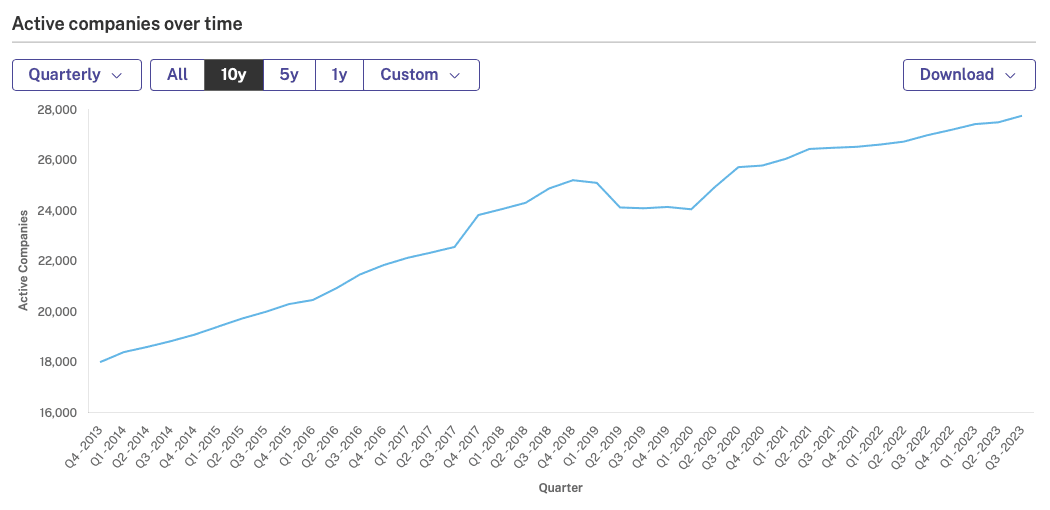
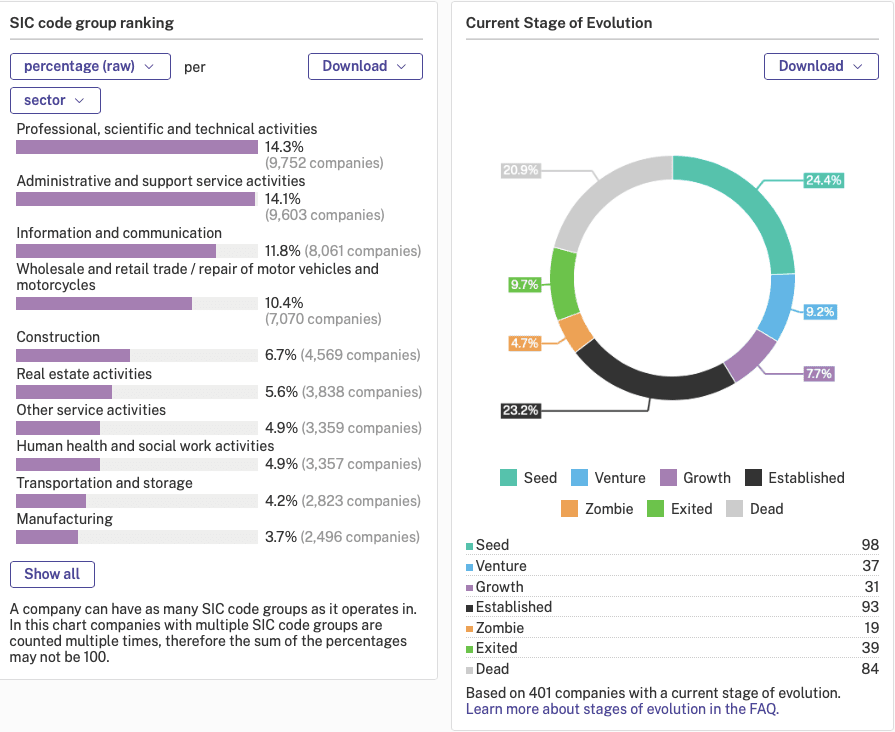
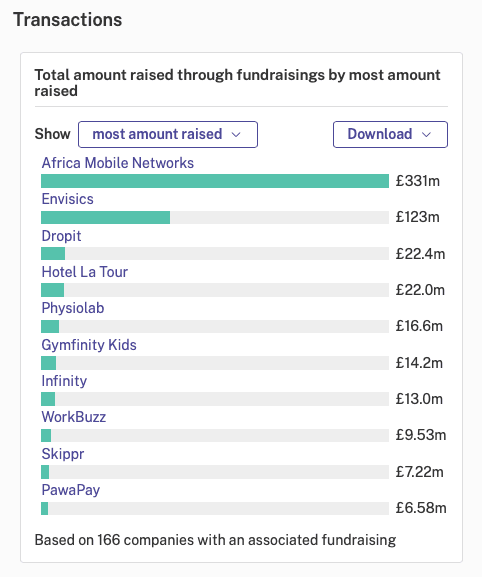
Through our platforms, you can see the current picture of any given business ecosystem, including breakdowns of business growth rates, information on the labour market, and aggregated data on different sectors—plus a lot more.
Let’s take one example to illustrate this:
If you want to see businesses specifically in Milton Keynes, simply search for that locality through Beauhurst.