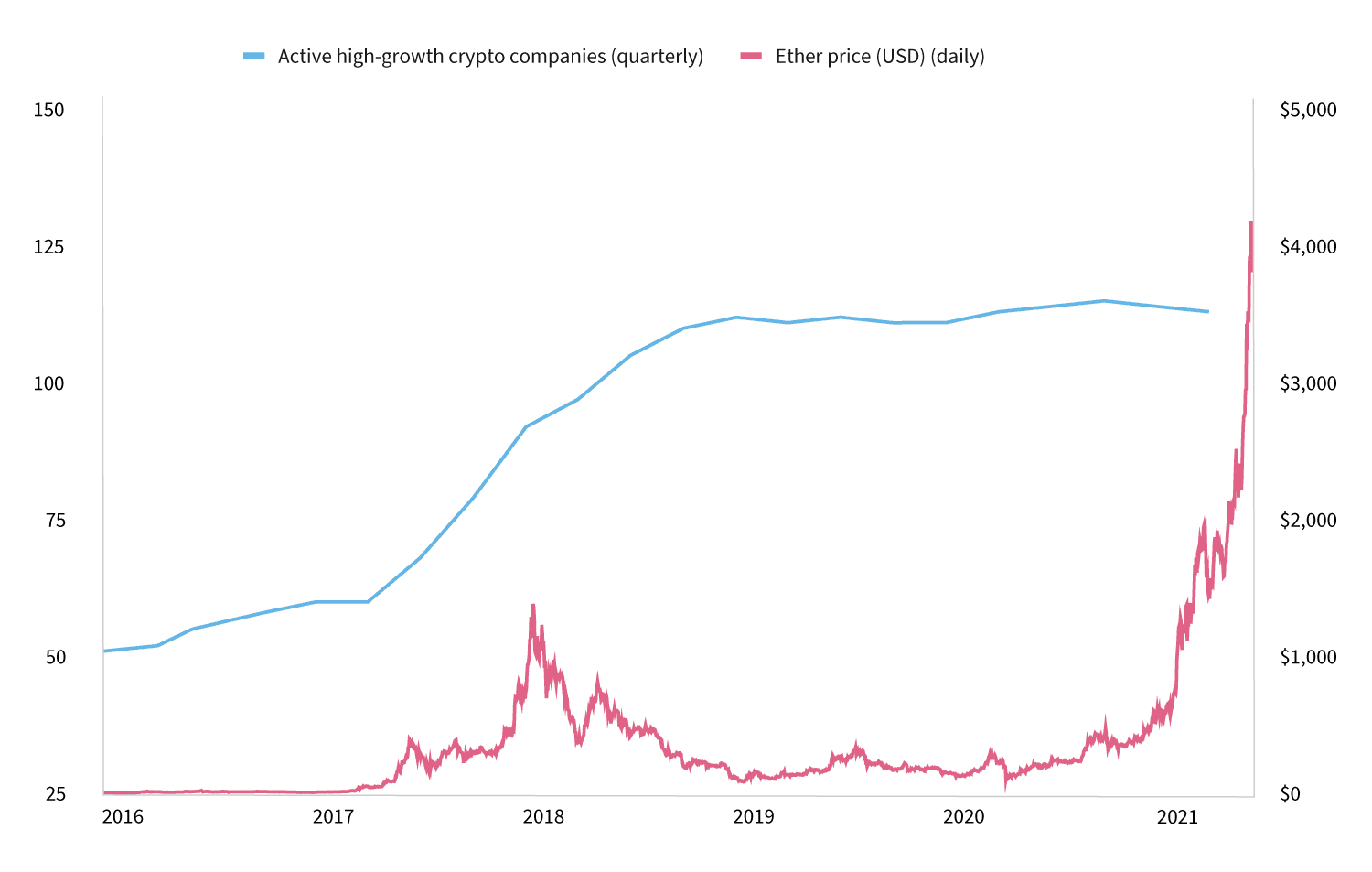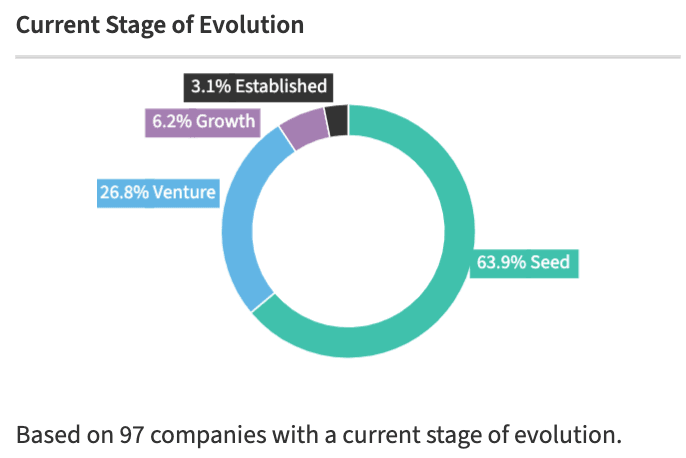
Cryptocurrencies and blockchain technology are increasingly working their way into the mainstream. The news that El Salvador will start accepting Bitcoin as legal tender, and the recent IPO of crypto exchange and wallet Coinbase, are just two developments that go to show cryptocurrencies are here to stay, despite controversy over their associations with scams and money laundering. Here, we explore the latest developments in crypto markets, and take a look at the high-growth companies working to stabilise these notoriously volatile currencies.
If you need a reminder on how blockchains and cryptocurrencies work, check out our previous blog on what makes blockchain secure.
Crypto is not just Bitcoin
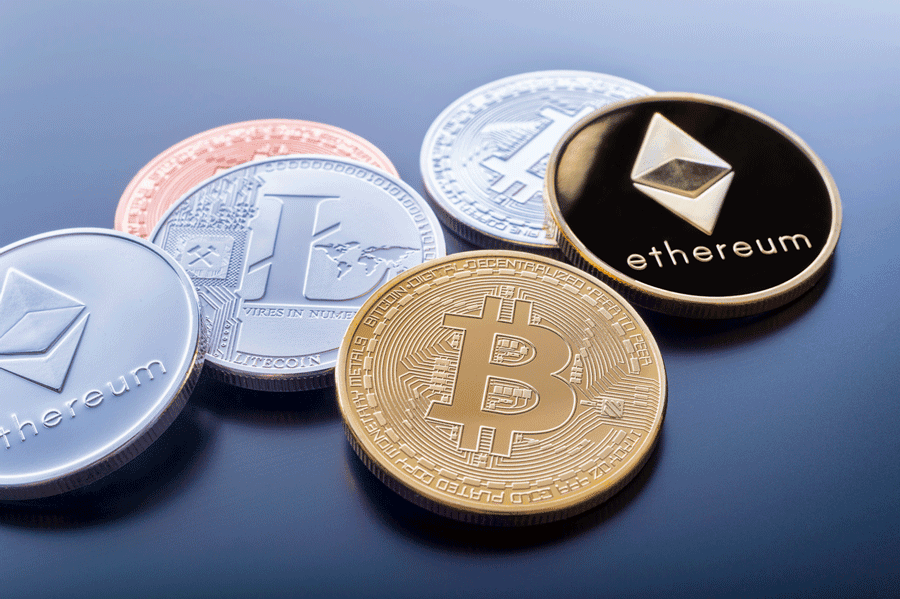
Whilst Bitcoin, the first ever blockchain and digital currency (BTC), is probably the most well-known, it is by no means the only one out there. Dogecoin, another blockchain and associated token, has also been in the news as of late. Inspired by the popular shiba inu dog meme, Dogecoin was initially created in 2013 as a reaction to the somewhat wild speculation in crypto markets at the time, and has since continually fluctuated in popularity and price, often in correlation with Tesla and SpaceX CEO Elon Musk’s notorious tweets.
The second biggest blockchain by market cap, after Bitcoin, is Ethereum. Whilst Bitcoin and Dogecoin are primarily used as a store of value, Ethereum enables much more than simply transferring coins between addresses. Ethereum’s ‘smart contracts’ allow logic-based decisions and transactions to occur on the blockchain. Instead of simply ‘do X’, Ethereum smart contracts enable ‘if X happens, then do Y; if not, do Z’. This means that complex applications can be built on the Ethereum blockchain.
DeFi the disruptor
Ethereum was created in 2015, and has since seen an explosion of applications and protocols being run on it. One of the most fertile areas of innovation is ‘Decentralised Finance’ (or DeFi). DeFi aims to replace traditional financial institutions and central banks with decentralised alternatives, run entirely automatically on the blockchain. For example, users can lend and borrow money, earn interest, take out insurance, trade in futures and derivatives, and buy put or call options, all on the Ethereum blockchain, without relying on any third parties to carry out these transactions on their behalf.
One of the core reasons for the growth of innovation in this area is ‘composability’. Decentralised applications (DApps) are all open source and public, allowing DApps to be built on top of each other, taking the functionality of one application and adding to or improving it with another.