What makes the Bitcoin blockchain secure?
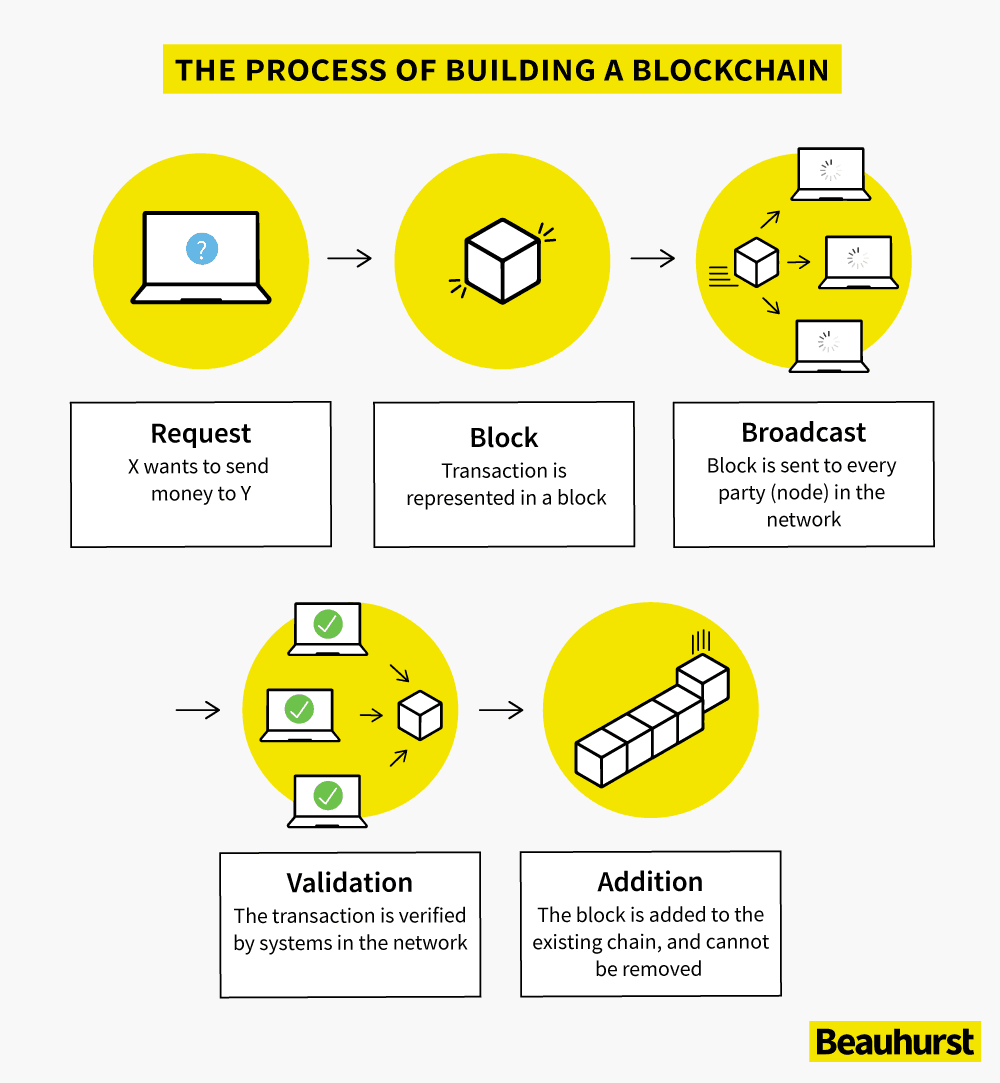
In a blockchain, every block contains the hash code of the previous block. For a hacker to modify one transaction, they would subsequently need to modify every following block in the chain to ensure the hash codes remain consistent—a possibly never-ending task which makes blocks practically immutable. The use of blockchain technology for Bitcoin thus protects it from tampering.
The Proof-of-Work system is another way in which the Bitcoin blockchain boasts an ultra-secure system. Proof-of-Work requires ‘miner’ nodes to race to solve a complex computational problem, known as a hash function. This problem requires extremely large computing power, and hence expensive hardware systems, to complete, acting as a deterrent and barrier to malicious miners attacking the blockchain network. The race amongst miners to solve the problem also promotes efficiency in processing the transaction. The first miner to solve it is rewarded with newly-minted Bitcoins, providing incentives to process transactions as quickly as possible.
Industries disrupted by blockchain companies
Whilst Bitcoin is the most commonly used blockchain, blockchain technology can be adapted to record any type of digital information, and helps make supply chains more efficient and transparent. So it’s no wonder we’re starting to see blockchain adoption across a broad range of sectors in the high-growth ecosystem, from fintech and artificial intelligence to real estate technology, e-commerce, and the internet of things (IoT).
Blockchain is often referred to as a ‘disruptive’ technology due to the potential it has to transform industries as we know them today. Let’s explore how blockchain’s broad functionality could be used to disrupt the banking, legal and healthcare services, through a variety of different use cases.
Blockchain in banking and financial services
Blockchain banking offers a cheaper, quicker, and more secure payment alternative to traditional financial institutions. Blockchain banking would involve banks issuing their own digital currencies and distributed ledger systems for processing payments, similar to Bitcoin. As blockchain is decentralised, no middlemen service fees would be charged. This is particularly useful for cross-border financial transactions; with blockchain, overseas parties will save on both financial service fees and exchange rates.
With payments being processed as soon as they are verified, blockchain banking also offers a more efficient system. Bitcoin transactions, for instance, typically take 10 minutes to be verified by miners (at which point, the payment is immediately transferred, regardless of the parties’ locations). Additionally, due to blockchain’s immutable nature and its complex cryptographic-secured network, transactions are very secure. This secure payment channel offers unrivalled protection from hackers and thus enables payments to be highly safeguarded.
Blockchain in legal services
A large part of the legal services industry involves processing and storing sensitive information. This is high up on the list of possible blockchain applications, with digital ledgers functioning as a perfect tool for the sector.
Contracts
The legal services industry can tap into blockchain’s ability to securely store contracts through ‘smart contracts.’ A smart contract is a digital code mapped out on a blockchain, that automatically monitors and executes legal agreements. Smart contracts can be used when it’s possible to measure the triggering event of a contract digitally, such as when payments are made or public registries are updated. This automation eliminates the need for contractual monitoring by lawyers. Ethereum is a popular blockchain for facilitating smart contracts. The Ethereum blockchain platform even provides options for payment through blockchain, using its own cryptocurrency, Ether.
Conveyancing
Blockchain systems can also simplify conveyancing, where property is transferred from sellers to buyers. The conveyancing process involves many parties (buyers, sellers, both their legal representatives, and both their banks) and many documents (transfer of land contracts and certificates of title). Dealing with this number of documents and parties is often a lengthy and complex process. Instead, storing details of the property and relevant documents within a block, which can be accessed by all parties, would reduce correspondence between parties and requests for information, save time, and ensure confidentiality.
Blockchain in healthcare
The healthcare industry is dense with personal data records, medical insurance claims, and other pieces of important patient information, all stored in different systems. Blockchain infrastructure offers an easily shareable and secure system of patient management. This could operate through patient data being stored within a block. These digital assets can then be shared with different medical institutions and practitioners in real time, once the patient’s consent has been given.
Additionally, the use of blockchain technology in healthcare could create a more efficient and streamlined appointment process. Patients would not need to constantly provide their medical information every time they visit a new medical institution or practitioner, with their data readily accessible. This would also prevent the problem of data being lost and needing to be recollected, as in the case of missing blood test samples.