What is the UK Government’s Future Fund?
The Future Fund was a matched funding scheme that the Government introduced to support UK businesses during the pandemic. Delivered by the British Business Bank, it saw eligible companies secure between £125k and £5m via convertible loan agreements (CLAs), to match funding from private investors. The Future Fund scheme first launched in May 2020, before being extended in November that year. The application process closed in January 2021.
What is a convertible loan?
A convertible loan note is a form of debt that can later be converted into equity shares. In the case of the Future Fund, investors can choose to have their loan repaid on maturity (36 months), at an exit event, or on default of the business. The terms of the repayment include accrued interest and a redemption premium. Otherwise, the loans will convert to equity upon the company’s next funding round or exit.
What were the Future Fund’s eligibility criteria?
To qualify for the Future Fund scheme, a business had to have raised at least £250k worth of equity investment between April 2015 and April 2020. It also needed to have no shares or securities listed on a regulated market, exchange or listing venue (i.e. it was a private limited company).
Qualifying businesses had to be incorporated in the UK before the start of 2020, and a parent company if part of a corporate group (although certain non-UK parent companies were eligible, if they had a substantial UK presence but incorporated abroad in order to take part in an accelerator programme).
On top of this, they needed to have met one or both of the following criteria: at least 50% of employees based in the UK; at least 50% of revenue from UK sales. According to our analysis, 7,629 UK companies were eligible for the Future Fund.
How did the Future Fund matched funding scheme work for investors?
As an investor-led scheme, applications to the Future Fund were submitted by the Lead Investor, on behalf of all other matched investors and the investee company. These were then processed on a first come, first served basis, regardless of the investment size.
Whilst government contributions were limited to a maximum of £5m, the amount that could be invested by third party investors via the scheme was not capped. Upon conversion of the loan, the amount of interest paid must be at least 8%, but the actual interest rate was agreed between investors and recipients before applying.
The Future Fund CLAs were not eligible for the UK Government’s Enterprise Investment Scheme (EIS) and Seed Enterprise Investment Scheme (SEIS) tax relief programmes. But any previous SEIS or EIS-qualifying rounds will not be affected when the loans convert.
What can the convertible loans be used for?
Under the terms of the Future Fund, loans are intended for the sole purpose of financing companies’ operating or capital expenditure. They can’t be used to repay shareholder loans, nor can they be used to pay dividends, bonuses or discretionary payments. They also can’t be used to cover advisory, placement or corporate finance fees in relation to the CLA, or to finance external ventures or parties.
These regulations were designed to ensure that the Future Fund supports business innovation and growth during the coronavirus pandemic. Companies that had already claimed other forms of COVID-19 government support, such as The Coronavirus Business Interruption Loan Scheme (CBILS), were still eligible for new funding via the Future Fund.
What the British Business Bank has released about the Future Fund so far
Altogether, the UK Government’s Future Fund issued 1,190 convertible loans during the scheme, worth £1.14b in total. At the end of August, the British Business Bank reported that more than half of convertible loan agreements were in the £125k-£500k bracket, and published aggregated diversity statistics on Future Fund investee companies.
The Government has not set out any diversity and inclusion criteria or targets for the matched funding scheme, but the gender and ethnicity demographics of each recipient’s senior leadership team were self-reported when they first applied, as well as where in the UK they’re based.
According to this data:
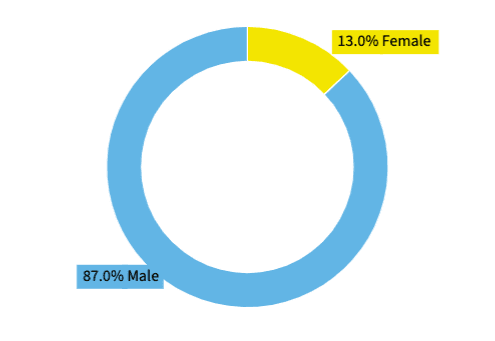
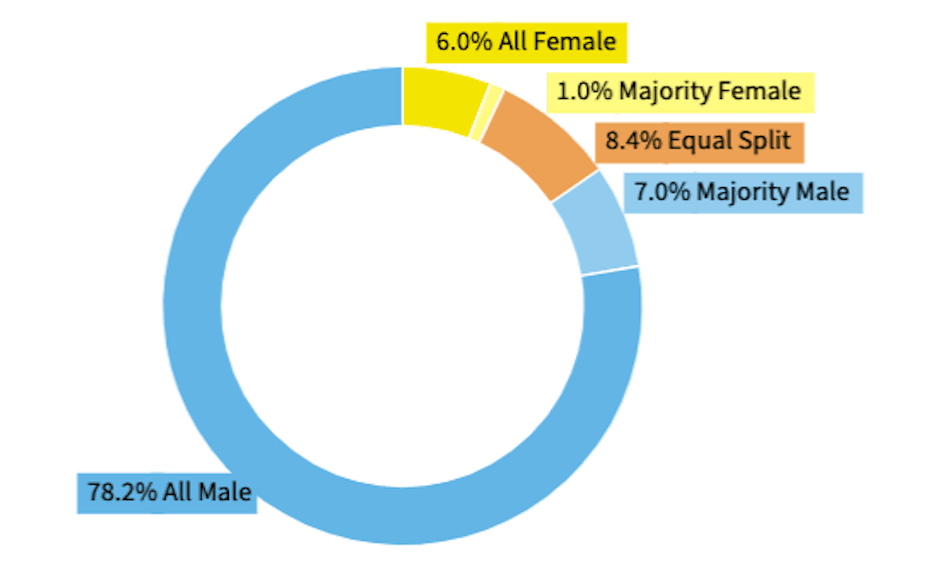
- 68% of convertible loans went to mixed-gender senior teams, but just 1% to all-female teams
- 46% of convertible loans went to businesses with mixed-ethnicity senior teams, but just 5% to all-BAME teams
- 55% of convertible loans went to companies headquartered in London, 23% to the South, 13% to the North, 4% to the Midlands, and just 5% to Scotland, Wales and Northern Ireland combined.
As of 31 August 2021, 158 of the Future Fund’s CLAs had converted to shares. At the time, the British Business Bank released a list of these businesses that the Future Fund now has an equity stake in (to be updated at the end of each quarter, as more loans convert).
What about the companies they haven’t mentioned yet?
Since the British Business Bank’s latest release over two months ago, many more companies have converted their Future Fund loans into equity shares. By analysing press releases, and searching across ownership filings made to Companies House, our Data team has identified a further 162 Future Fund investee companies. This is now the most complete, publicly-available list of Future Fund recipients.
So, where has our £1.14b of public funding gone?
As more Future Fund loans convert, we’ll learn more about where public money has ended up via the scheme. Using the 320 companies we do know about, however, we can get a general idea of the types of companies and founding teams being backed by our £1.14b worth of funding.
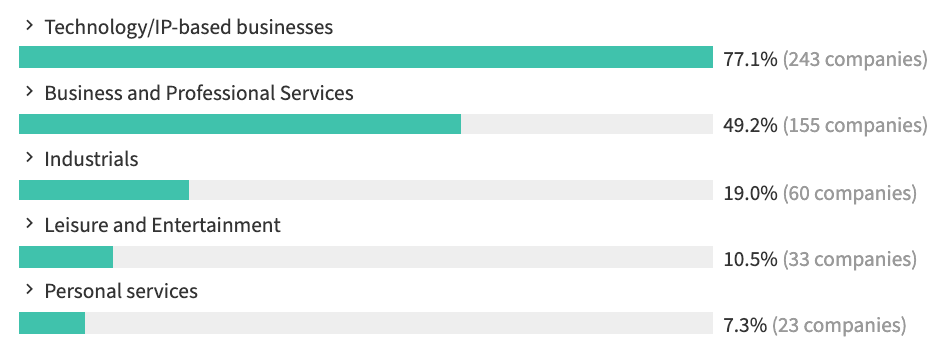
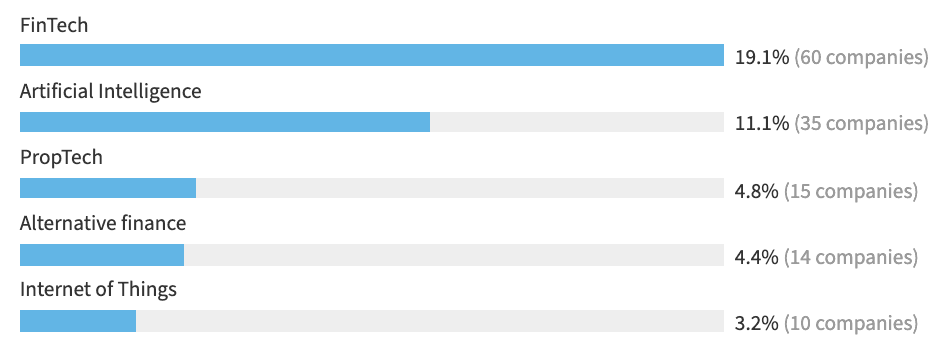
By far the most popular sector for participants in the Future Fund, for instance, is Technology & IP-based businesses. Tech companies account for more than 77% of our known Future Fund cohort, which comes as no surprise, given the dominance of tech in the UK equity market. In fact, all five of the top verticals for convertible loan recipients are subsets of the tech industry: primarily fintech (19%) and artificial intelligence (11%), ahead of proptech (5%), alternative finance (4%) and IoT (3%).
Future Fund investee companies: by sector