Whether you’re conducting M&A due diligence, targeting high-value investors for fundraising opportunities, or refining your B2B sales strategy, knowing who owns — or has a stake in — a company, is vital.
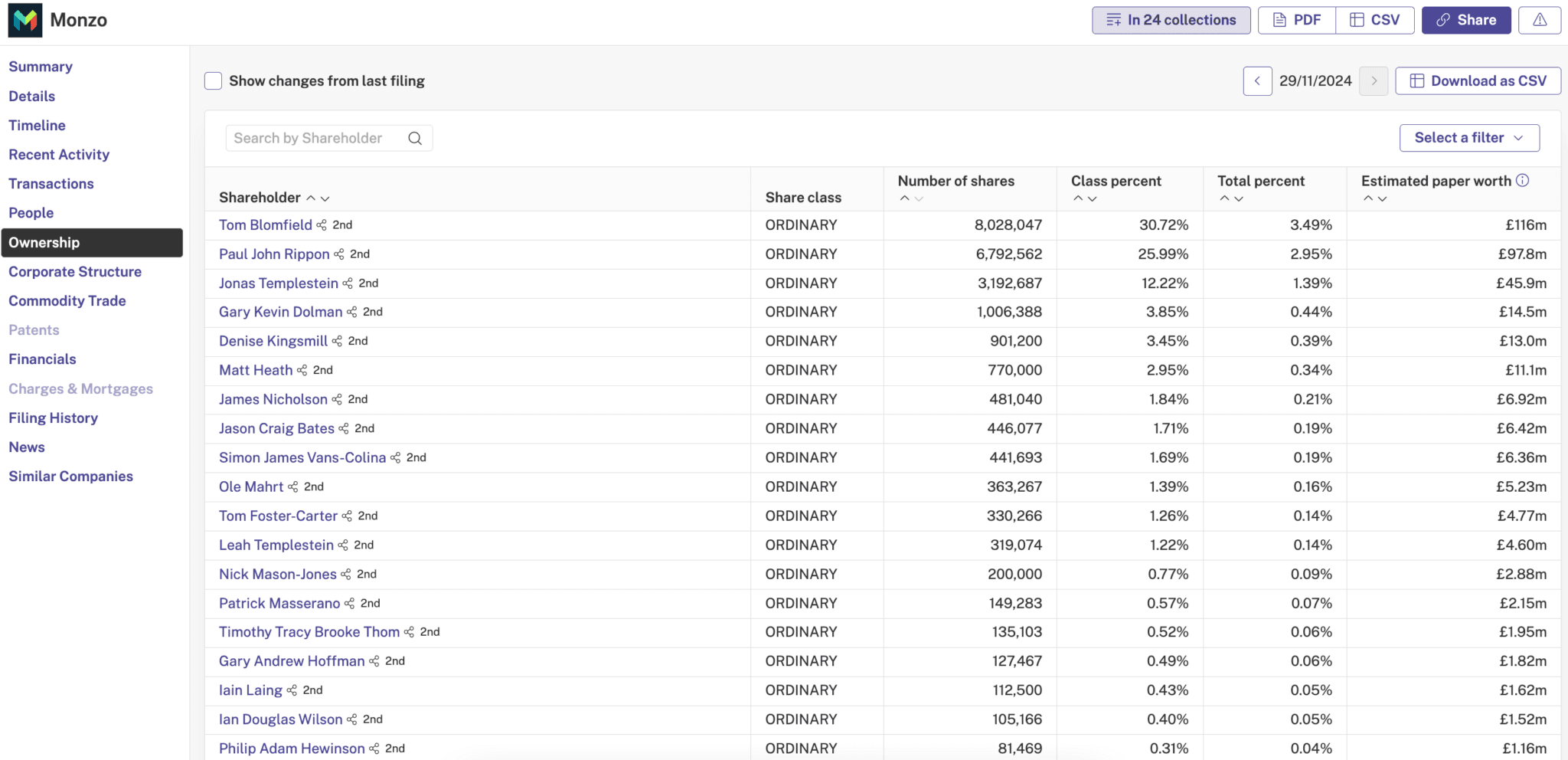
Shareholder information helps you uncover key decision-makers, reveals financial backers, and enables you to assess strategic alignment. However, getting hold of that data is often easier said than done.
Traditional methods of researching company ownership can be time-consuming and frustrating. Public databases like Companies House, while useful, might not have everything you need. And shareholder data is often buried in PDF filings, difficult to interpret, or simply outdated.
Fortunately, there is a better way — in this article, we’ll explore how you can easily access and understand company shareholder data.
Why a company's shareholders matters
There’s a number of reasons why company shareholder data can be useful for you and your company.
Due diligence and risk checks
Whether you’re thinking about a partnership, acquisition, or buy out, it’s smart to know who’s actually behind the business. Shareholder info can flag risks, show who really calls the shots, and help you make more informed decisions.
Smarter investment decisions
If you’re looking to invest, it helps to see who’s already on board. Are there respected investors involved? Has the company raised before? These kinds of insights can reveal a lot about a company’s credibility and future potential, or help you spot any Risk Signals.
Better-targeted sales and outreach
Trying to win over high-growth businesses? Knowing who their backers are can give you an edge. Shareholders often influence the direction of the company (and the budget), so they can be just as important as the leadership team — especially when it comes to closing deals.
Staying ahead of the competition
Keeping an eye on who’s investing in your competitors can help you spot trends early, understand where the money’s going, and find opportunities before others do.
The traditional way to find shareholders
There are ways to find information on a company’s shareholders manually — but they’re not exactly quick or easy.
Companies House is usually the first stop. Whilst it’s a great free resource, it has some limitations. Shareholder details are often buried in old PDF filings, which means a lot of scrolling, downloading, and deciphering. Even after this, the data might only reflect the founding shareholders, with no clear picture of who actually owns what today.
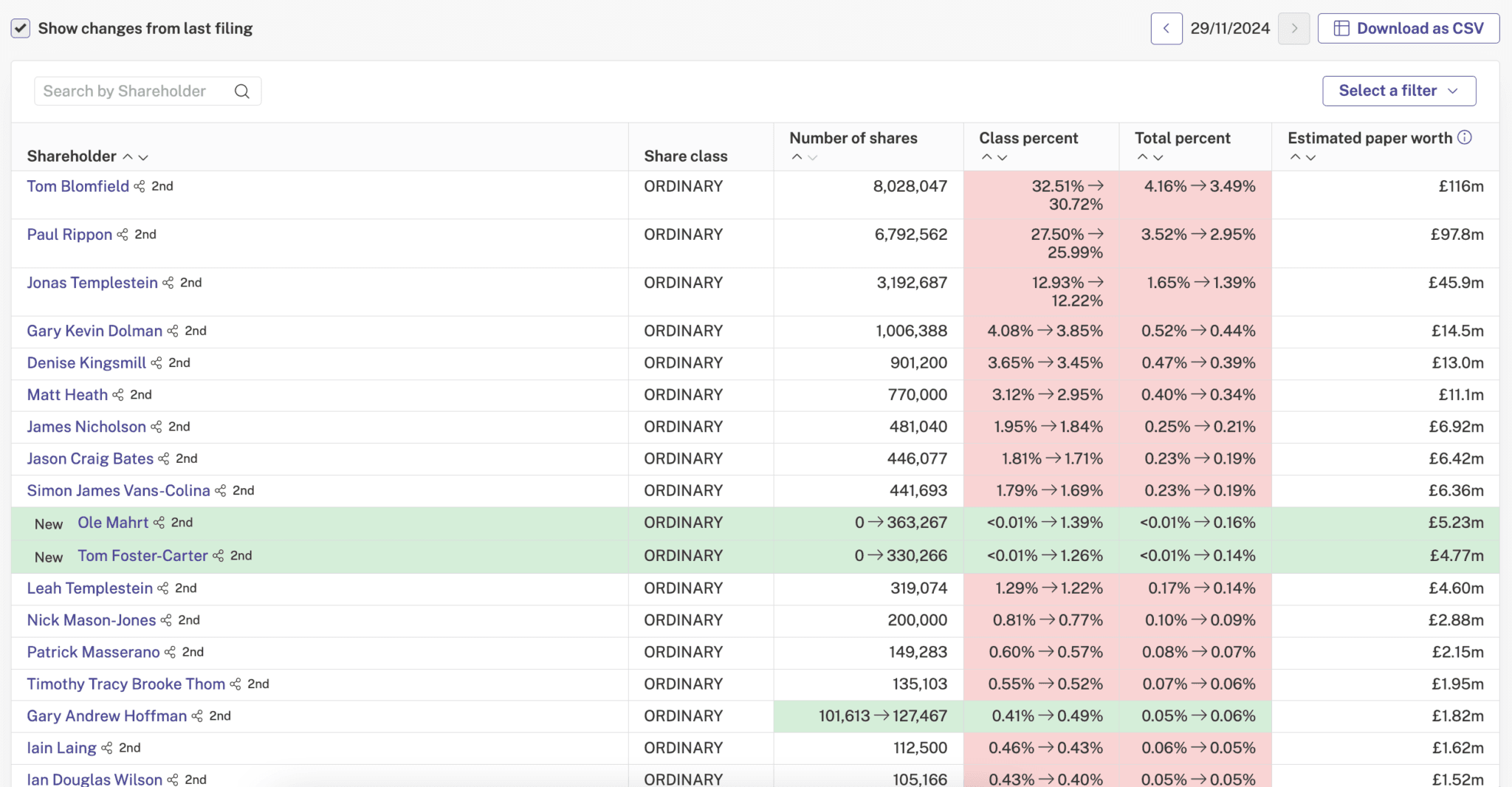
You can also try piecing things together using other databases and online sources, but accuracy can be hit or miss. Many platforms don’t show the full picture, especially when it comes to beneficial owners, who hold shares through nominee structures or offshore entities. It’s also very difficult to understand the changes to a company’s shareholders over time. So even after hours of searching, you might still have a significant knowledge gap.
All of this adds up to a serious drain on time and resources. If you’re juggling multiple companies or need quick insights for fast-moving deals, manual research just doesn’t cut it. It’s tedious, slow, and often incomplete which can be frustrating when you’re trying to make confident, well-informed decisions.