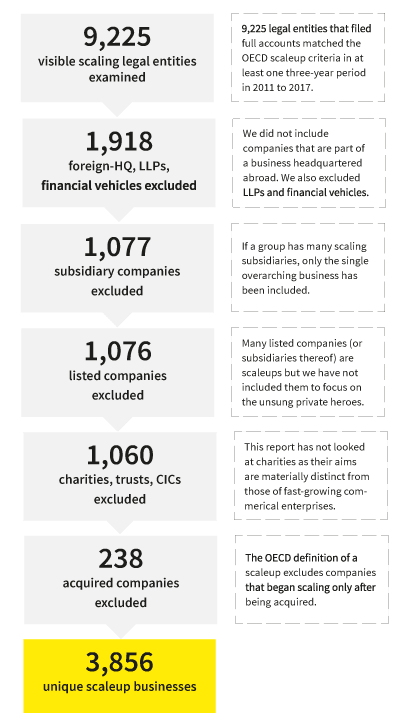
In the words of Irene Graham, CEO of the ScaleUp Institute – our partners on this research – these companies are vital to the strength of the UK economy.
And as Stephen Welton of BGF put it, scaleups and companies which aspire to that status have the most potential to make a “disproportionately large impact on innovation, productivity, employment, and ultimately growth of the whole economy.”
We’re pleased, then, to have put together this new and comprehensive research.
What are ‘invisible’ scaleups?
An important feature of the companies studied is that they invariably have at least two of the following:
- Turnover of 10.2m or more
- Assets exceeding £5.1m
- 50+ employees
These are the criteria that determine whether or not a company is obliged to file full accounts with Companies House.
So some firms that meet the definition above will be scaleups, but are ‘invisible’.
Current policy recommendations may soon change this, and we await progress eagerly. Until then, our report looks only at visible scaleups.
What does a typical scaleup look like?
Many high-growth companies operate in the tech space – but not these. The majority of scaleups operate in property, distribution, and manufacturing. Again defying the popular conception of high-growth firms as cutting-edge consumer products (think challenger banks, mobile apps, food delivery firms), 35% of scaleups sell services to other businesses.
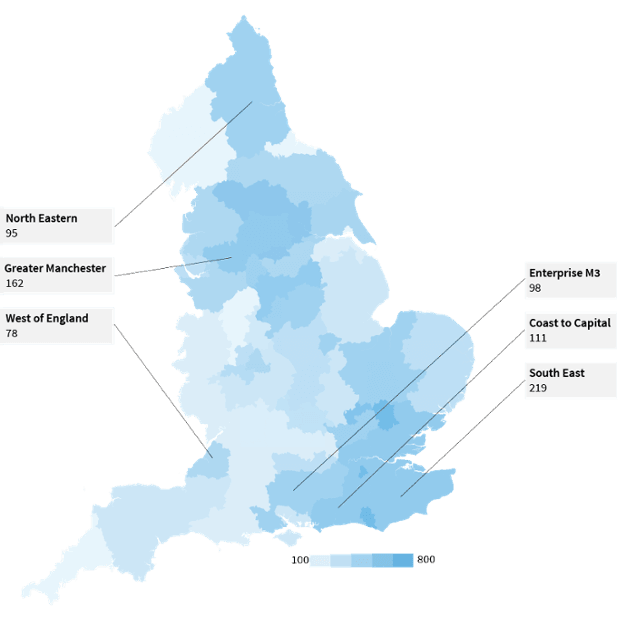
Scaleups are also less concentrated in London than you might expect – though 21% of scaleups nonetheless reside there. But the North West perfoms well, hosting 10%, and the West Midlands boast 8%. The firms appear to cluster around Local Enterprise Partnerships (LEPs) too: Greater Manchester alone has 162, and Leeds City Region is not far behind on 144: