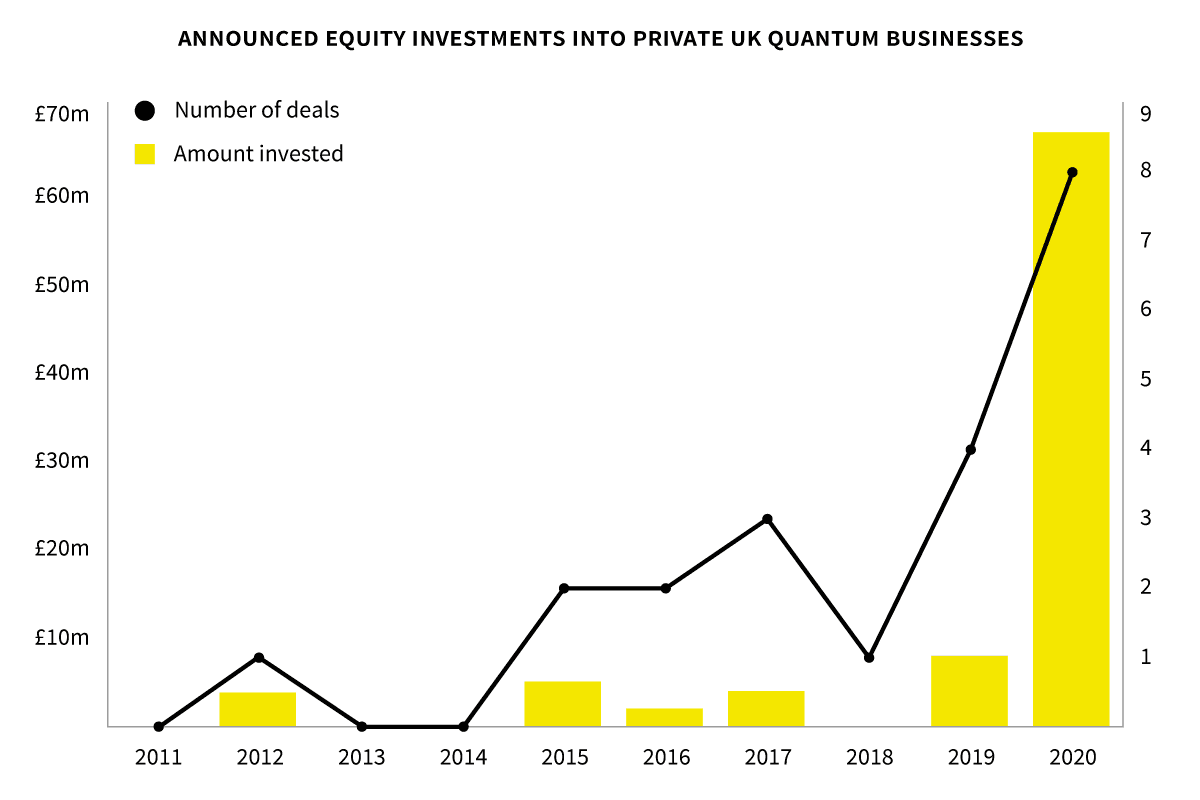
Much of this activity was driven by Cambridge Quantum Computing (CQC), founded in 2014 by Ilyas Khan (CEO), Takis Psarogiannakopolous (CTO) and Henrik Dreyer. Now in its growth stage of evolution, the company builds tools for the commercialisation of quantum technology, such as its quantum development platform “t|ket>”, and offers access to a wide variety of corporate and government clients.
CQC now employs over 60 scientists and operates across the US, Europe, and Japan. To date, the team has raised £53m in equity finance, including a £411k raise in February 2020 and a £33.6m round closed on 9th December. Investors include IBM, Serendipity Capital, Honeywell Ventures, and Touchstone Gold, among others.
Other key players in the sector include M Squared, which combines quantum with photonic technology, and Quantum Motion Technologies, which is developing and commercialising a silicon-based quantum computer. Meanwhile, Oxford Quantum Circuits has produced the UK’s first commercially available quantum computer. Each of these companies has attracted investor attention, and millions of pounds in capital over the past year.
And private investors aren’t the only ones betting on this industry. In June 2020, the Government pledged £70m to help develop quantum technologies, and ensure the UK is a world-leader in the sector. This investment is part of its £1b Quantum Technologies Challenge, led by UKRI, which has involved over 80 companies across the UK, along with almost 30 research organisations. This latest funding will help with projects like the diagnosis of cancerous tumours during surgery.
Fintech
It should come as no surprise that the UK’s best performing startup sector continued at an incredible growth rate through 2020. The nature of COVID and the risks involved with exchanging cash has put a greater emphasis on contactless payments, and the alternative forms of payments available through fintech.
The squeeze on working capital has also forced many businesses, big and small, to take a closer look at their finances and find more convenient and insightful ways of managing cash flows. For B2B fintechs, demand for lending has skyrocketed, and some (including Starling Bank and Tide) helped roll out the Government’s Bounce Back Loan Scheme.
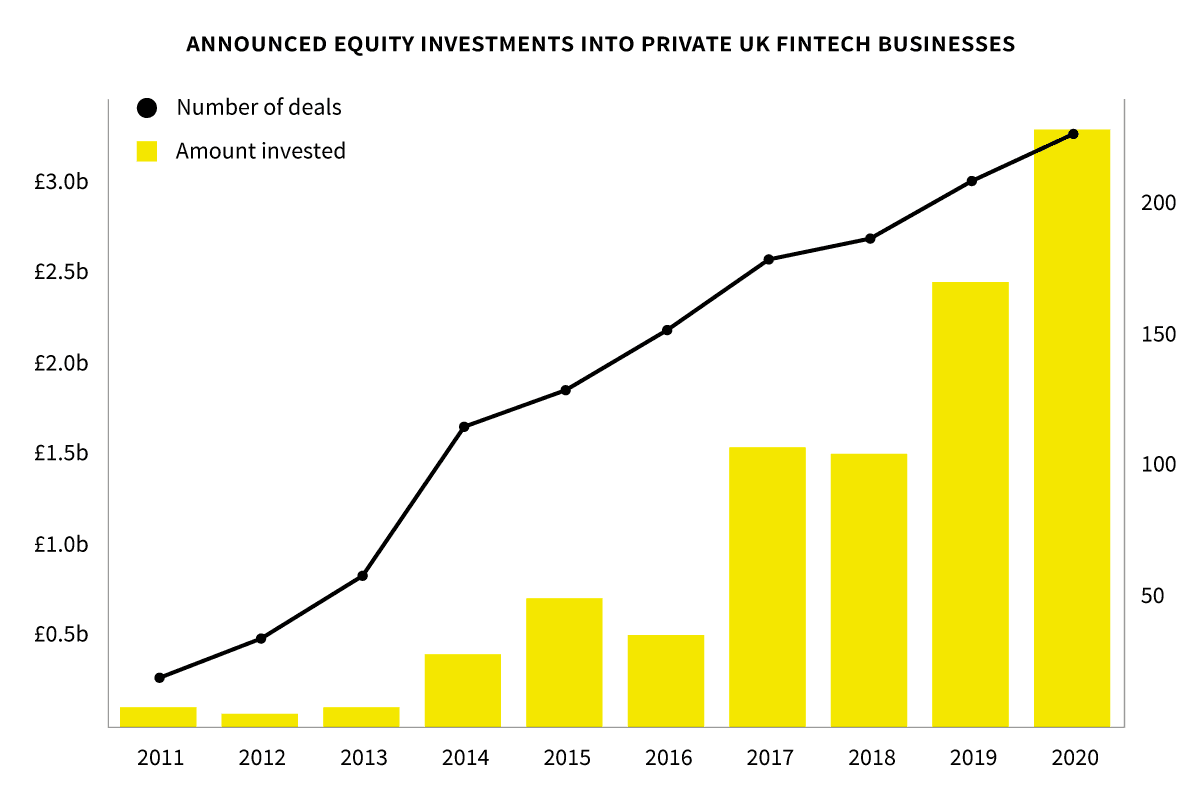
And there’s no doubt that fintech will be sticking around for the long term, well beyond coronavirus. Thus, current uncertainty has made little dent in investor confidence in the sector. Between 2019 and 2020, deal numbers increased 9%, from 209 to 227, whilst the amount invested increased 35%, from £2.44b to £3.29b.