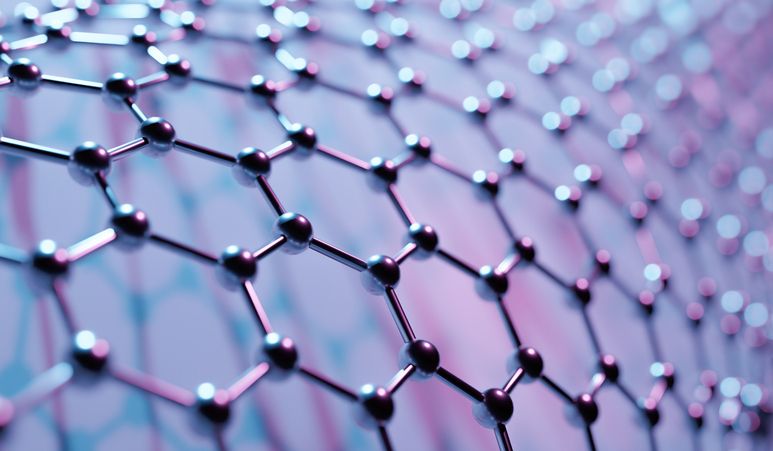
Technology company Paragraf develops and produces graphene-based electronic devices. It uses scalable technology that’s compatible with existing electron device manufacturing processes. Paragraf’s technology has enabled the company to produce graphene directly onto substrates like silicon, silicon-carbide, sapphire and gallium-nitride. The company aims to create graphene products that will make technology more accessible, create cheaper applications, cover new ground in medical science, reduce energy poverty, and benefit the environment.
Founded in 2015, Paragraf employs around 50 people, and is headquartered outside of Cambridge, in Huntingdonshire. Last year, the company’s GHS series of Graphene Hall Sensors won Excellence in Product Design at the Elektra awards, which recognises high-quality, groundbreaking product design which has made an impact within its market. Actively seeking partnership opportunities to accelerate its vision, Paragraf has so far raised £21.7m in fundraisings.
Vollebak is a clothing brand that uses advanced materials to make clothes more resilient, elastic and breathable. Founded in 2008, the company earned a place on our list of top graphene companies by creating the world’s first graphene jacket. Attracted by graphene’s properties as the lightest, most conductive, and strongest material ever discovered, Vollebak released a high-quality graphene jacket in 2018 as an experiment.
By opening up the R&D process to its customers, the company hopes to increase the speed of creation and commercialization of bionic clothing. Every month, it releases a new clothing concept that has not been seen before. Headquartered in Camden, Vollebak employs 25 people and has raised £4m in fundraisings to date.
Perpetuus manufactures graphene products. Its patented technology—surface modified functionalized graphene stacks, carbon nanotubes and other nanomaterials—are produced and supplied to several industries. In particular, the company supplies conductive and functional inks and coatings, and surface-modified graphenes for the tyre production rubber sector.
Cycle tires that have been enhanced by the material are currently sold into the global market, and Perpetuus expects commercial sales into the general market to launch this year. Its Chief Nanotechnology Officer, Dr Zhongfu Zhou, is a Research Professor and Principal Investigator in the Department of Physics at Aberystwyth University. He is recognised as one of the world’s leading authorities in 2D materials applications. Based in Swansea, Perpetuus has raised a total of £3.5m in investment since launching in 2011.
Integrated Graphene has developed a way to manufacture 3D Graphene Foam, Gii, for biosensors and energy storage. Gii uses graphene’s very large, electrochemically-active surface area, high conductivity, and pure surface to create a highly sensitive biosensor, while the material’s fast-charging and high-power properties make it an excellent energy storer that overcomes the limitations of traditional batteries.
The startup’s 3D Graphene Foam is reproducible, scalable, high-performing, high-quality, and low cost, and its usage will allow other manufacturers to develop revolutionary products and ‘gain access to a $1trillion graphene application market’. Founded in 2016, the graphene supplier has secured a total of £3.4m in fundraisings, and is based in Stirling, Scotland.
Graphene Composites has combined graphene and aerogel to create a lightweight material that’s around 1k times stronger than steel. As a world leader in nanomaterials research, development, and design, the company uses its core composite technology in product areas that require a combination of strength and lightness. Its new graphene product in health, armour, aircrafts and wind energy innovations.
In response to the COVID-19 pandemic, Graphene Composites has developed a virucidal and germicidal ink that can be used for PPE, filtration solutions, and high-tech surfaces. Founded in 2016, the company has offices in County Durham, as well as Providence, USA. To date, Graphene Composites has raised £3.4m in investment.
Graphene Lighting develops LED light bulbs that are coated with graphene, which acts as a heat sink, enabling the bulbs to run brighter and for longer. The company also uses the material’s high conductivity and energy storage capabilities to produce graphene light bulbs that are better for the environment, use less energy, and are more affordable. And their energy dispersion is completely uniform.
Graphene Lighting owns more than 50 exclusive global patents, covering the US and EU market, on LED filament lighting. It has been recognised as a leader in the industry by publications such as the BBC, Wired, The Financial Times, Vice, and The Independent. Founded in 2013, the company is based in Bury, in the North West of England, and has so far raised £2.3m in funding.
Anaphite has found a way to create graphene batteries via an inexpensive and scalable process, which the company believes can lead to the commercialization of its products. Graphene batteries could be a key part of the sustainable energy revolution, as using graphene-based nanocomposites reduces charging time and increases energy capacity.
The Bristol-based startup aims to scale its production process, to accelerate bringing the material to market. It’s currently open to partnership, collaboration, and product deployment requests, and recently secured a £1.2m funding round. In total, the company has raised £2m in investment.
Founded in 2015, G2O Water Technologies produces graphene-based coatings, providing scalable and affordable solutions to filtration problems. The company’s process is based on graphene oxide nanoplatelets, which is a less expensive material than single-layer graphene. Graphene nanoplatelets are also easily processed and can be dispersed in water-based products.
G2O is working with a number of partners, on projects like the separation of oil from water, domestic water filtration, waste water treatment, personal care and hygiene and desalination. In March 2021, the Halton-based technology company announced that, following a series of funding rounds and grants, it would be switching its focus from product development to external growth. It’s so far secured a total of £2m in fundraisings.
HexagonFab uses graphene nanotechnology to ‘unlock the secrets of proteins and their interactions.’ The HexagonFab Bolt detects the electrical charge of biomolecules, instead of characterising them using optical measurements, which is a far more costly process. As graphene is affected by electrical changes in the environment, users can detect minute changes which, in turn, signal biomolecule binding within proteins.
HexagonFab’s goal is to make protein characterisation more affordable, as well as easier and faster to use. Its graphene-based technology will assist researchers with the development of new medicines and ensure their safety. In April 2021, the company secured a £1.9m seed funding round. It has offices in South Cambridgeshire, UK and Zurich, Switzerland.
Advanced Material Development provides funding for nanotechnology research programmes, alongside producing graphene-based products. The company partners with nanotechnology departments in universities, to support the development and commercialization of solutions for industrial applications.
The research Advanced Material Development supports is being deployed in areas such as advanced sensors, electronics and devices, composites, photonics, and functional coatings. It believes that advancing applied material science will be crucial in solving some of the societal challenges around sustainability. Founded in 2017, the Guildford-based company has raised a total of £1.7m in investment to date.