Companies House is the UK’s public register of businesses. You can use its data to find key information on all companies, including their incorporation dates, annual filings, directors, and much more. But if you’ve used Companies House to look for this information already, you’ve probably encountered its limitations:
- Companies House data is on legal entities, not companies as they’re commonly known. For instance, you might not find familiar names like Boots or Deliveroo listed on Companies House—as their legal entity name may be different.
- It’s really difficult to search for companies by industry. Companies House uses Standard Industrial Categorisation (SIC) codes to organise businesses. These haven’t been updated since 2003, meaning you won’t find any industries newer than that. For example, modern industries like fintech, AI, and blockchain are still listed under broad categories such as ‘Other information technology service activities (62090)’. That doesn’t help you find specific types of companies in high-growth industries.
- There are limits to the data it includes. For instance, you won’t find information on key events in a company, such as when it was founded or if it received investment. There are companies in the UK that aren’t listed on Companies House, too.
- Companies House data can be out of date or inaccurate. Companies have nine months to submit their annual accounts, and the accuracy of the information they supply is their responsibility. Companies House explicitly says it “does not verify accuracy of information filed”. Put simply: the data isn’t always trustworthy.
- It’s a hassle to extract and compare data about companies. Most filings are uploaded as scanned PDFs, where the text is not searchable. That means you have to manually find information you want. Plus, they’re not standardised, meaning the data you have on one company might not be available for another.
- It lacks information on key people. While Companies House features data on directors and business owners, it doesn’t show full contact information or provide insights into their network. It’s tricky to use Companies House search this way, and you’ll also have to sift through multiple entries for the same name.
Just one example of how these issues might limit you:
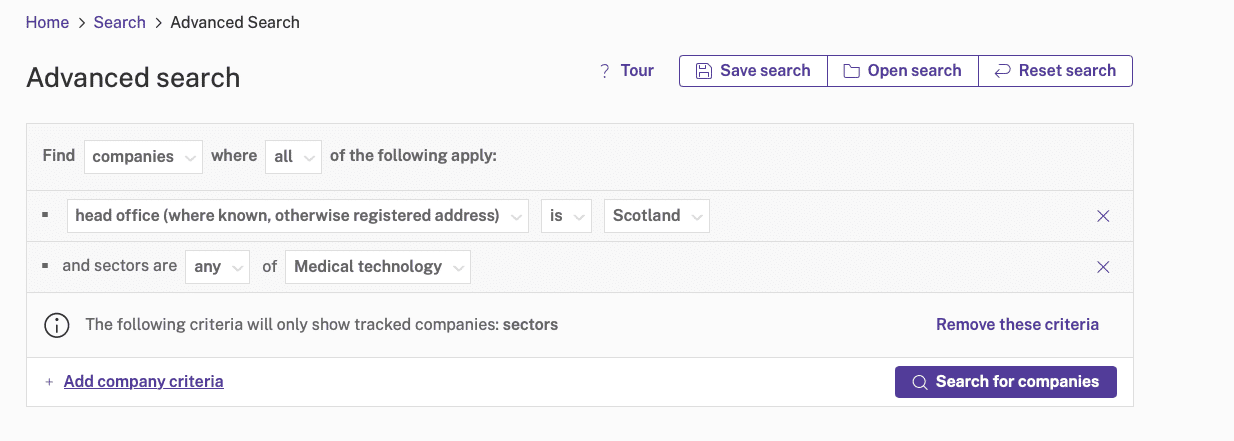
If you’re looking for a company of a specific size in a specific sector and region—say, a fintech scaleup in Manchester—it would be really hard to find it through Companies House. Searching by SIC codes would return several irrelevant companies, whose filings you’d have to trawl through manually to find recent investments.
For most universities, councils, or private companies, accessing this data via Companies House—and controlling its accuracy—is a huge drain on time and resources.
But there are alternative platforms to search for UK company information. In this article, we introduce four alternatives to Companies House, starting with our own platforms.
Four alternatives to Companies House
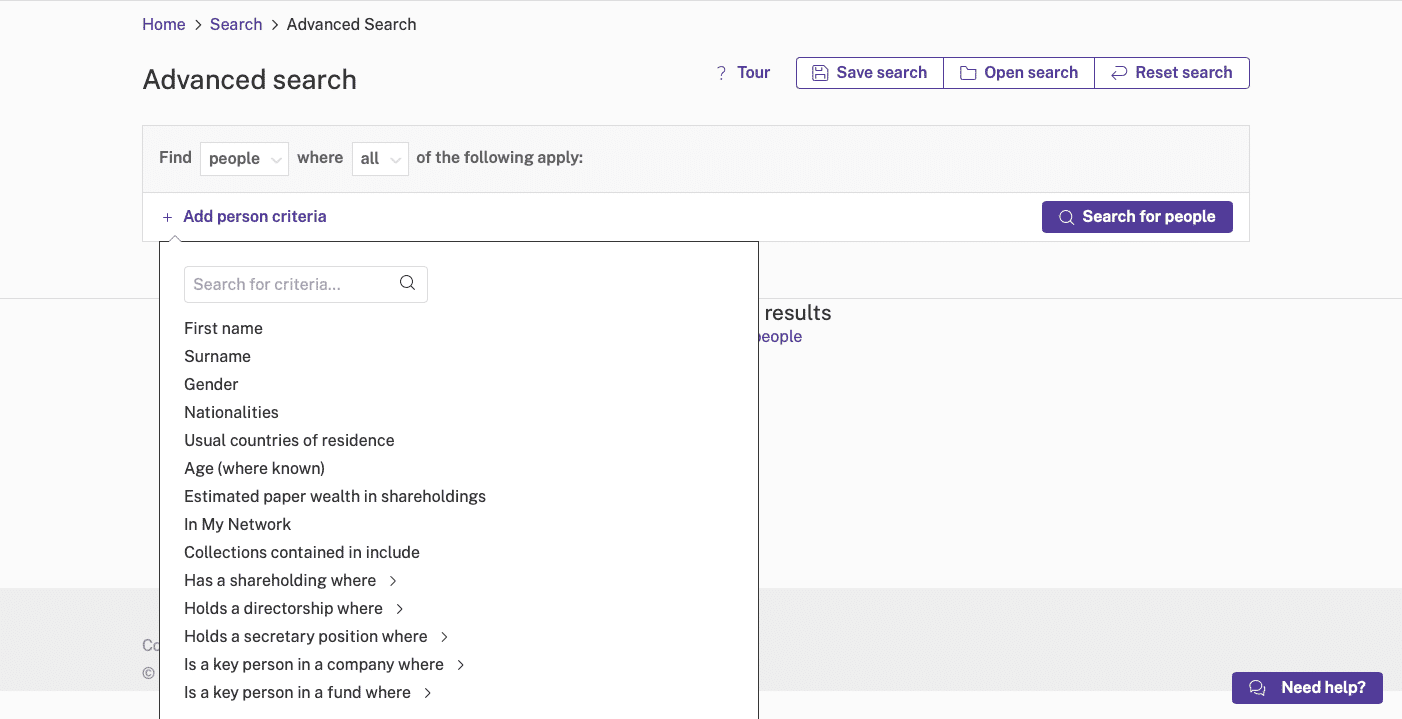
1. Beauhurst: Get accurate data on every single UK company
To solve the problem of finding rich, accurate, and up-to-date UK company information, we built Beauhurst platforms specifically for the public sector, professional services, investors, and company sales teams.
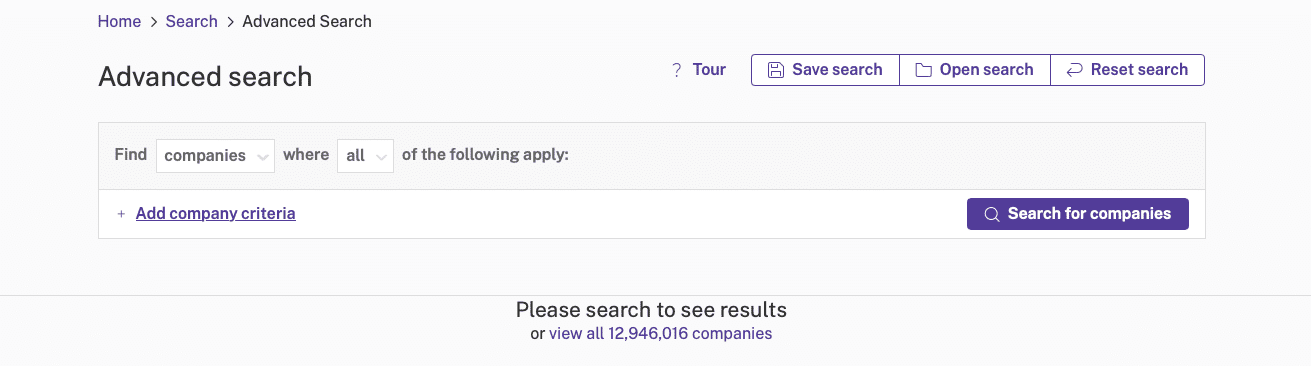
We have data on every single company in the UK. As of 2023, that adds up to nearly 13 million companies, compared to 5 million on Companies House. The amount of data that Beauhurst has on each company—and the quality of that data—is genuinely unmatched.
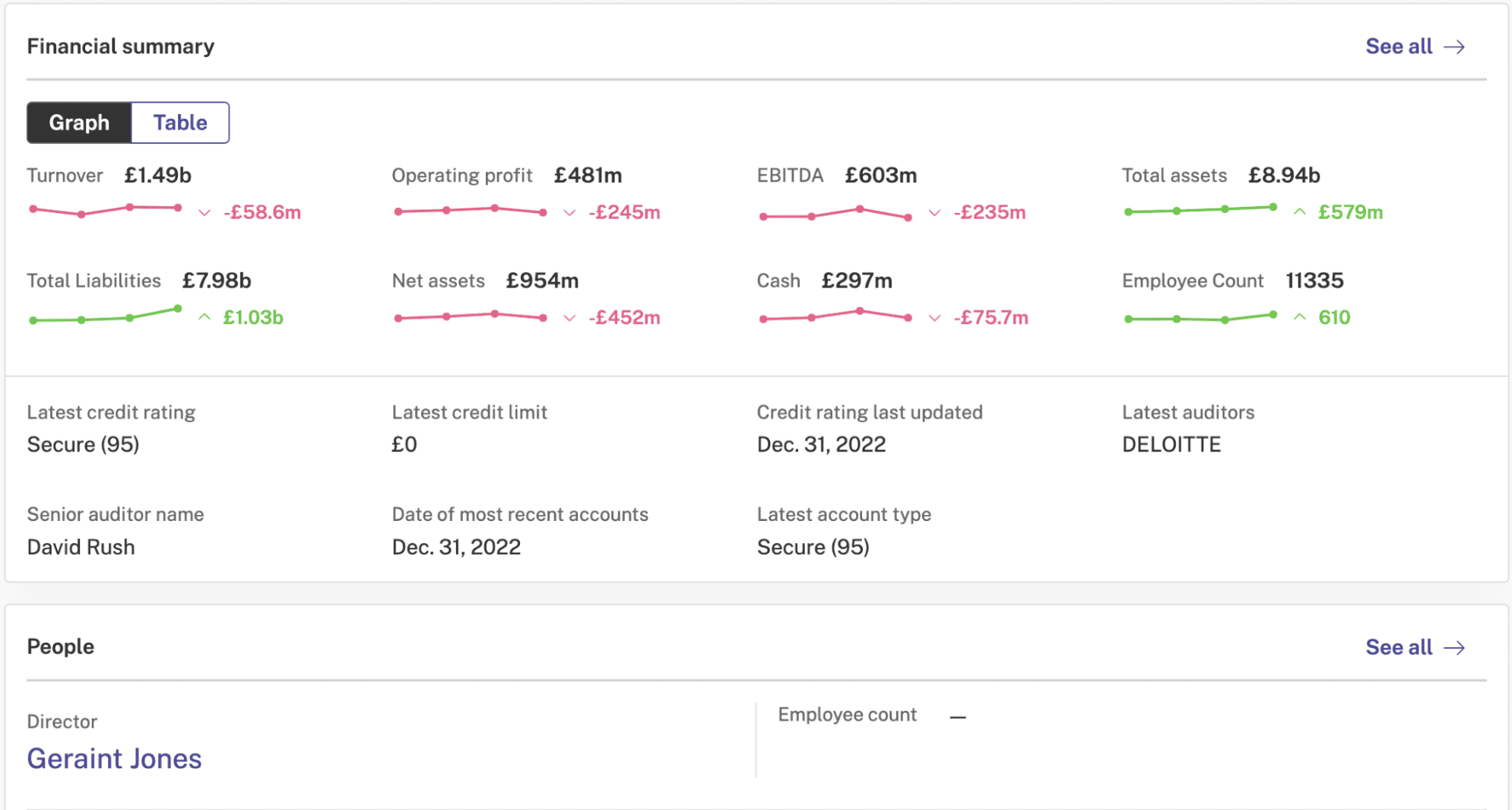
For every company, users can browse thousands of data points—on significant company events, key people, company value, and more. For instance, you can see:
- Which patents they’ve filed in which countries
- If they have spunout of a university
- Their latest funding rounds
- And lots, lots more
We use a vast range of up-to-date sources, including HMRC, censuses, European patents, direct private company updates, industry and national media, and others. This also includes Companies House data, which we enrich and update so you get the complete picture.